Tulsi Gabbard’s Remarkable Rise: From Hawaii Congresswoman to America’s Intelligence Chief
Explore Tulsi Gabbard’s extraordinary journey from Hawaii congresswoman and U.S. Army officer to Director of National Intelligence, highlighting her political evolution, military service, and leadership in national security.
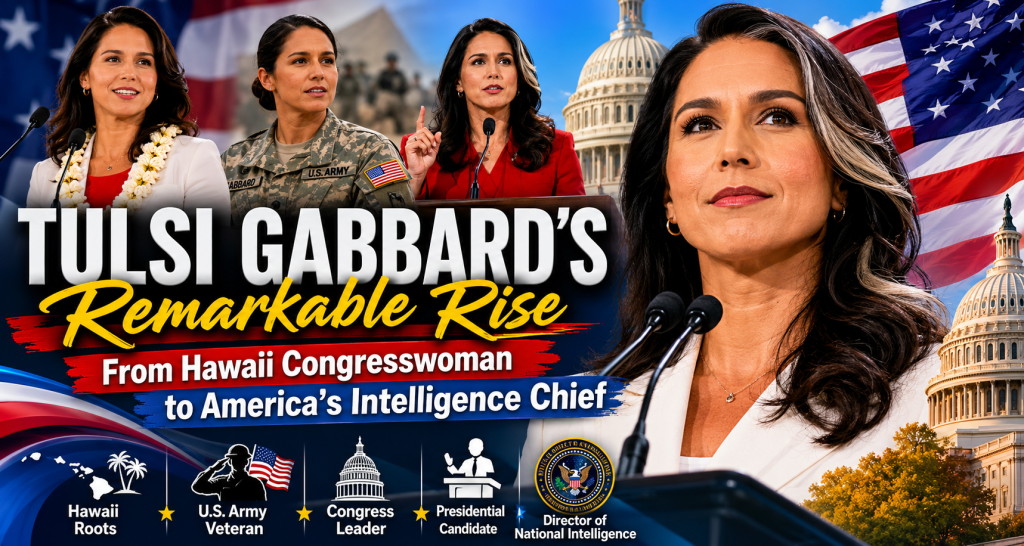
Tulsi Gabbard has remained one of the most talked-about figures in American politics over the past decade. Known for her independent positions on foreign policy, military service background, and willingness to challenge political norms, Gabbard’s career has crossed multiple political landscapes. Her rise from Hawaii politics to becoming Director of National Intelligence placed her at the center of major debates about national security, government transparency, and U.S. foreign policy.
Early Life and Military Service
Born in American Samoa and raised in Hawaii, Tulsi Gabbard entered public service at a young age. She first gained national attention as one of the youngest women elected to a state legislature in the United States. Alongside her political career, Gabbard served in the military and completed deployments connected to U.S. operations in the Middle East.
Her military experience became a defining part of her public identity. Supporters frequently pointed to her service as evidence of her firsthand understanding of the costs of war, while critics sometimes challenged her foreign policy conclusions. Nevertheless, her military background helped distinguish her from many of her contemporaries in Washington.
Rise in National Politics
Gabbard served in the U.S. House of Representatives representing Hawaii from 2013 to 2021. During her time in Congress, she developed a reputation for taking positions that did not always align with party leadership.
She often advocated for a more restrained foreign policy, arguing that the United States should avoid unnecessary military interventions. Her views attracted support from voters across the political spectrum who were concerned about prolonged overseas conflicts.
At the same time, some of her positions generated controversy, particularly regarding international affairs and meetings with foreign leaders. These debates helped increase her national profile and made her one of the most recognizable members of Congress.
The 2020 Presidential Campaign
In 2020, Tulsi Gabbard launched a campaign for the Democratic presidential nomination. Although she was not considered a frontrunner, her campaign attracted attention because of her focus on foreign policy, civil liberties, and opposition to what she described as endless wars.
During televised debates, Gabbard frequently challenged fellow candidates and highlighted issues related to military intervention and government accountability. Her campaign gained a dedicated following and elevated her national visibility, even though she ultimately did not secure the nomination.
The campaign marked an important turning point in her political career, transforming her from a congressional representative into a nationally recognized political figure.
Political Realignment
Following her departure from Congress, Gabbard increasingly distanced herself from the Democratic Party. She criticized party leaders on issues including national security, free speech, and government institutions.
Over time, her political positions aligned more closely with conservative viewpoints on several major issues. This evolution culminated in a significant political shift that drew widespread media attention and reshaped her public image. Her transition highlighted broader changes occurring within American politics, where traditional party loyalties have become increasingly fluid.
Appointment as Director of National Intelligence
A major milestone in Gabbard’s career came when she was confirmed as Director of National Intelligence in 2025. In that role, she became responsible for overseeing coordination among the United States intelligence agencies and advising the president on intelligence matters. She was also recognized as the first female military combat veteran to hold the position.
As intelligence chief, Gabbard pledged to strengthen public trust in intelligence institutions and improve coordination across the intelligence community. Her appointment generated significant debate due to her unconventional political background and previous criticism of intelligence agencies.
Supporters viewed her as an outsider capable of bringing reform, while critics questioned whether her past statements would influence intelligence policy.
Challenges and Controversies
Gabbard’s tenure as intelligence director was marked by intense scrutiny. Her management decisions, policy positions, and involvement in several high-profile issues attracted attention from lawmakers, analysts, and the media. Reports described tensions within parts of the national security establishment and disagreements over policy direction.
The debates surrounding her leadership reflected broader political divisions in Washington regarding intelligence oversight, transparency, and the role of national security institutions.
Despite criticism, supporters argued that she brought a fresh perspective to intelligence leadership and challenged long-standing assumptions within government agencies.
Resignation in 2026
In May 2026, Tulsi Gabbard announced that she would step down as Director of National Intelligence. She stated that her decision was driven by family considerations after her husband was diagnosed with a rare form of bone cancer. The resignation was scheduled to take effect on June 30, 2026.
Her departure sparked extensive discussion in political circles. While the official explanation focused on family circumstances, media reports also examined broader political dynamics surrounding her tenure.
The resignation marked the end of a significant chapter in her public service career and renewed speculation about her future role in American politics.
Future Political Prospects
Even after leaving government service, Tulsi Gabbard remains an influential figure in political discussions. Her unique combination of military experience, congressional service, presidential campaign experience, and intelligence leadership gives her a profile unlike most contemporary politicians.
Observers continue to debate whether she will pursue elected office again, become more active in policy advocacy, or play a role in future national campaigns. Her ability to attract attention from both traditional conservatives and independent-minded voters ensures that she will remain a figure of interest in American political life.
Tulsi Gabbard’s career reflects the changing nature of modern American politics. From state legislator and military officer to member of Congress, presidential candidate, and Director of National Intelligence, she has repeatedly taken paths that defy conventional political expectations.
Whether viewed as a reformer, a controversial outsider, or a political independent, Gabbard has left a lasting mark on debates about foreign policy, national security, and the future direction of American leadership. As the political landscape continues to evolve, her influence and legacy are likely to remain subjects of discussion for years to come.