
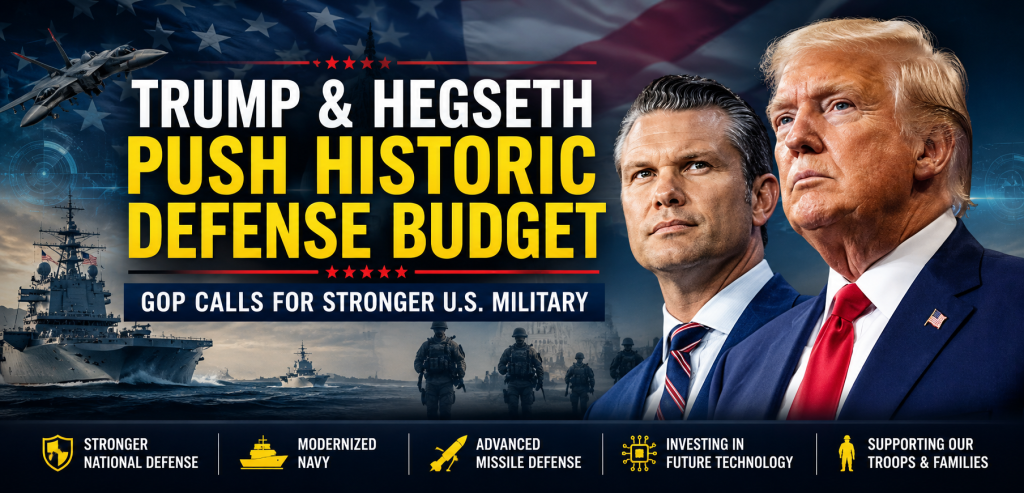
$1.5 Trillion Defense Plan? Trump and Hegseth’s Military Vision Draws National Attention
Washington, D.C. — Defense spending has once again become a central issue in American politics as President Donald Trump and Defense Secretary Pete Hegseth advocate for a significant increase in military funding. The proposal, supported by many Republican lawmakers, aims to strengthen the United States military through modernization, expanded defense capabilities, and increased investment in emerging technologies.
The debate over defense spending comes at a time when global security challenges continue to evolve. Rising geopolitical tensions, advances in military technology by rival nations, and concerns about national preparedness have all contributed to calls for increased defense investment.
A Vision of Military Strength
Supporters of the proposed budget argue that the United States must maintain a military capable of responding to threats across multiple regions of the world. The administration’s plan focuses on rebuilding military readiness while accelerating the development of next-generation defense systems.
Defense Secretary Pete Hegseth has emphasized the importance of ensuring that American forces remain the most capable and technologically advanced in the world. According to administration officials, the proposed spending package would support critical modernization efforts across every branch of the military.
The budget prioritizes investments in missile defense systems, naval expansion, advanced aircraft, cyber capabilities, artificial intelligence, and unmanned technologies. Advocates say these investments are necessary to maintain a strategic advantage in an increasingly competitive global environment.
Expanding America’s Defense Infrastructure
One of the key objectives of the proposed budget is the expansion of America’s defense industrial base. Policymakers have expressed concerns that supply chain limitations and manufacturing shortages could affect military readiness during future crises.
The funding proposal includes measures designed to increase domestic production of military equipment, weapons systems, and critical defense components. Supporters believe a stronger industrial base would improve national security while creating jobs across multiple sectors of the economy.
Shipbuilding is another major focus area. The administration has argued that expanding the Navy’s fleet is essential for protecting international trade routes and maintaining a strong global presence. Investments in new vessels, maintenance programs, and modernization projects are expected to form a substantial portion of future defense expenditures.
Technology at the Center of Future Warfare
Military planners increasingly view technology as the defining factor in future conflicts. As a result, the proposed budget places significant emphasis on artificial intelligence, autonomous systems, advanced communications, and cyber defense.
Experts note that modern warfare extends far beyond traditional battlefields. Cybersecurity threats, satellite infrastructure, and information warfare now play critical roles in national defense strategies.
The administration’s proposal seeks to accelerate research and development efforts while supporting partnerships between government agencies, private industry, and defense contractors. These initiatives are intended to ensure that the United States remains competitive in emerging technological fields.
Support from Republican Lawmakers
Many Republican leaders have welcomed the defense spending proposal, arguing that national security should remain a top priority regardless of broader fiscal debates.
Supporters contend that a strong military acts as a deterrent against potential adversaries. They argue that investments made today can help prevent larger conflicts in the future by demonstrating American strength and readiness.
Republicans also point to ongoing security concerns in Europe, the Indo-Pacific region, and the Middle East as reasons to maintain robust military capabilities. According to advocates of the plan, strategic competitors continue to expand their own military programs, making sustained American investment essential.
Critics Raise Budget Concerns
Despite Republican support, the proposal faces opposition from some lawmakers and policy analysts. Critics question whether such a large increase in defense spending is necessary given existing budget pressures and rising national debt levels.
Opponents argue that government resources should be balanced among multiple priorities, including infrastructure, education, healthcare, and economic development. Some have called for greater oversight of military expenditures to ensure taxpayer funds are used efficiently.
Others believe that diplomacy, international partnerships, and economic initiatives should play a larger role in addressing global challenges alongside military preparedness. The debate highlights broader questions about federal spending priorities and the long-term financial implications of major defense investments.
Impact on Military Personnel
In addition to equipment and technology programs, the proposed budget includes support for service members and military families. Funding could be directed toward improved housing, healthcare services, training programs, and compensation initiatives. Military leaders have consistently emphasized the importance of recruiting and retaining highly skilled personnel. Supporters argue that investments in quality-of-life programs are essential for maintaining a capable and motivated force.
As Congress reviews the proposal, negotiations are expected to continue regarding spending levels, program priorities, and funding allocations. The outcome will shape the future direction of U.S. defense policy and influence military planning for years to come The debate reflects a larger national conversation about America’s role in the world and how best to prepare for emerging security challenges. Whether the proposal is adopted in full or modified through the legislative process, defense spending is likely to remain one of the most closely watched issues in Washington.
For now, the Trump administration and Defense Secretary Pete Hegseth continue to make the case that sustained military investment is essential to protecting American interests and maintaining global stability in an increasingly uncertain world.