
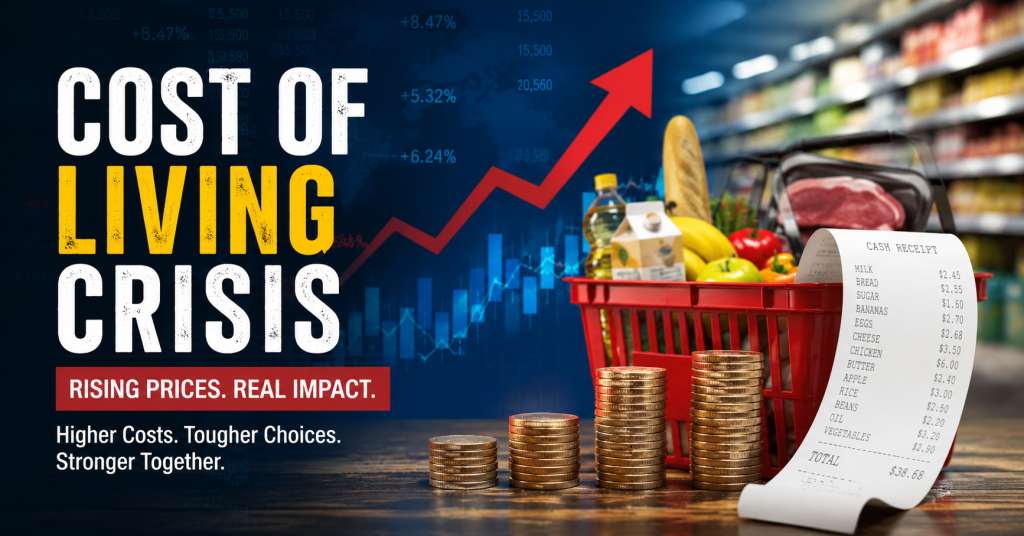
Cost of Living Crisis Deepens as Families Struggle With Higher Expenses
The cost-of-living crisis remains one of the most significant economic challenges facing millions of people worldwide. Rising prices for food, housing, transportation, and energy have placed increasing pressure on household budgets, forcing families to make difficult financial decisions.
and services increase faster than household incomes. As a result, consumers experience reduced purchasing power, meaning their money buys less than it did previously. Over the past few years, inflation, supply chain disruptions, geopolitical tensions, and energy market volatility have contributed to higher living costs across many countries. While inflation rates have eased in some regions, many households continue to feel the impact of elevated prices.
Rising Costs Affect Everyday Life
Food prices remain a major concern for consumers. Grocery bills have increased significantly compared to pre-pandemic levels, making it more expensive for families to maintain their usual shopping habits. Fresh produce, dairy products, and staple foods have seen notable price increases in many markets.
Housing costs have also become a major burden. Rent prices continue to climb in urban areas, while higher mortgage rates have increased monthly payments for homeowners. For many young adults and first-time buyers, affordable housing remains out of reach. Transportation expenses, including fuel and vehicle maintenance, have added another layer of financial pressure. Meanwhile, energy bills continue to fluctuate, creating uncertainty for households trying to manage monthly expenses.
Impact on Families and Communities
The ongoing cost-of-living crisis has affected people across all income levels, although lower-income households often face the greatest challenges. Many families have reduced discretionary spending, delayed major purchases, and sought additional sources of income to balance their budgets.
Financial experts note that prolonged periods of high living costs can lead to increased household debt and reduced savings. In some cases, consumers may cut back on healthcare, education, or recreational activities to prioritize essential expenses. Communities and charitable organizations have reported increased demand for support services, including food assistance programs and financial counseling.
Government and Policy Responses
Governments around the world have introduced various measures to help ease the burden on households. These initiatives have included tax relief programs, energy subsidies, targeted financial assistance, and efforts to control inflation through monetary policy.
Central banks have also played a key role by adjusting interest rates to manage inflation and stabilize economic conditions. While these measures can help reduce price pressures over time, their effects are often gradual.
The long-term solution will likely require a combination of economic growth, wage increases, housing development, and stable energy markets. Until then, households will continue adapting to a financial environment where managing expenses has become more important than ever.