How Food & Beverage Carriers Are Transforming Packaging in 2026
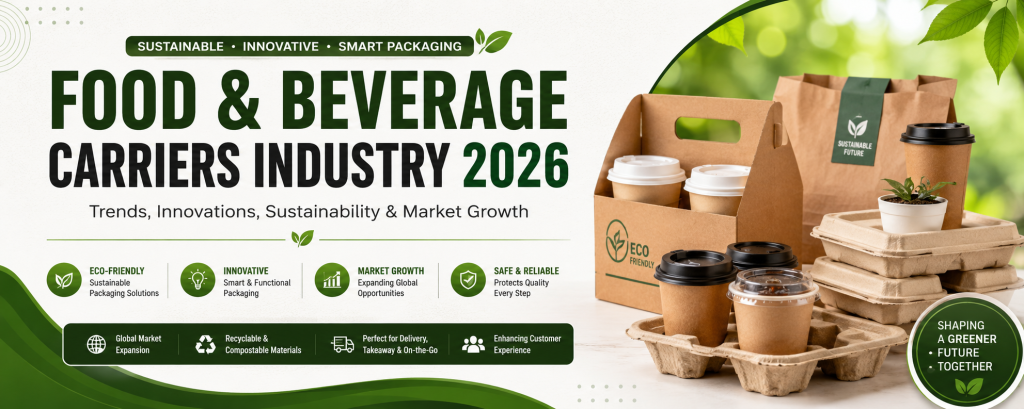
The global food and beverage carriers industry is undergoing a major transformation in 2026. As restaurants, cafés, food delivery services, and beverage brands continue expanding worldwide, the demand for innovative, eco-friendly, and durable carrier packaging solutions has increased significantly. From coffee cup holders and takeaway drink trays to temperature-controlled food transport packaging, businesses are investing heavily in smarter and more sustainable solutions.
The rapid growth of food delivery platforms, online grocery shopping, and takeaway culture has accelerated the need for reliable food and beverage carriers. Consumers now expect packaging that is not only functional but also environmentally responsible. As a result, manufacturers are focusing on recyclable materials, biodegradable packaging, and smart packaging technologies.
Sustainability remains one of the strongest forces shaping the food and beverage packaging sector. Governments across several countries are introducing stricter environmental regulations aimed at reducing plastic waste and encouraging recyclable materials. Many businesses are replacing traditional plastic carriers with molded fiber trays, paper-based cup holders, and compostable packaging alternatives.
Industry experts note that Extended Producer Responsibility (EPR) regulations are influencing packaging design decisions, encouraging brands to create lighter, recyclable, and waste-reducing carrier solutions.The global food packaging market continues to expand steadily. Industry forecasts estimate that the market could grow from approximately $421 billion in 2025 to nearly $599 billion by 2033. Growth is being fueled by increased demand for packaged
foods, meal delivery services, cold-chain logistics, and convenience products. Food service packaging is also experiencing strong growth as restaurants and delivery businesses require packaging that can maintain product quality during transportation. Market analysts expect continued investment in food carriers that offer improved insulation, durability, and sustainability. Technology is beginning to play a larger role in packaging design. Smart food and beverage carriers now include QR codes, freshness indicators, and digital tracking
systems that help improve transparency and customer engagement. These innovations allow consumers to access product information, recycling instructions, and promotional content directly from packaging. Many companies are also experimenting with connected packaging solutions that support inventory management and supply-chain monitoring, improving efficiency throughout the distribution process.
Despite strong growth prospects, the sector faces several challenges. Rising costs for paper, plastic, and packaging materials are increasing production expenses worldwide. Businesses must balance sustainability goals with affordability while adapting to changing regulations and supply-chain disruptions. Packaging companies are also under pressure to reduce waste, improve recyclability, and meet evolving environmental standards without compromising product protection and transportation efficiency.