Trump Claims Iran Deal Is Near as Global Tensions Rise
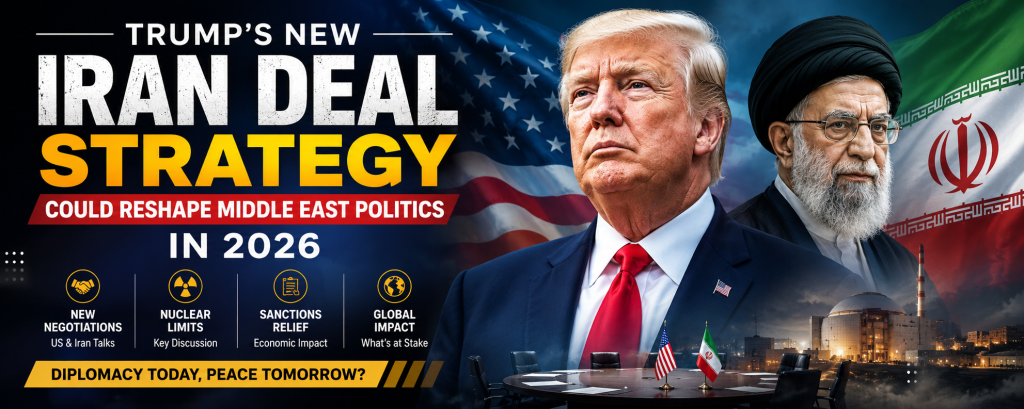
U.S. President Donald Trump is once again at the center of global diplomacy after claiming that a new agreement with Iran is “largely negotiated,” raising hopes of easing tensions in the Middle East while also triggering sharp political criticism at home and abroad.
The renewed talks come after months of escalating conflict involving Iran, Israel, and U.S. military pressure in the region. According to recent reports, negotiations are focused on ending hostilities, reopening the Strait of Hormuz, and establishing a framework for future nuclear discussions.
What Is the Proposed Trump-Iran Deal?
Iran could surrender or dilute parts of its highly enriched uranium stockpile. The United States may ease certain sanctions on Tehran. Discussions are underway about reopening the strategically vital Strait of Hormuz. A temporary ceasefire framework could create space for broader negotiations.
Trump told reporters that negotiations were progressing and suggested a final agreement could arrive “shortly.” However, Iranian officials have publicly disputed some of Trump’s claims, especially regarding control of the Strait of Hormuz.
Why the Iran Deal Matters Globally
The Iran issue remains one of the world’s most sensitive geopolitical flashpoints because of Tehran’s nuclear ambitions and the region’s importance to global energy supplies.
The Strait of Hormuz handles a major share of international oil shipments. Any disruption there can rapidly affect fuel prices and global markets. Analysts say even temporary peace between Washington and Tehran could stabilize energy markets and reduce fears of a broader regional war.
The current negotiations also represent a dramatic shift after years of confrontation. During his earlier presidency, Trump withdrew the United States from the 2015 nuclear agreement known as the JCPOA, calling it a weak deal that failed to permanently stop Iran’s nuclear program.
Political Reactions Divide Washington
Trump’s latest diplomatic push has divided American political leaders. Some Republican figures reportedly oppose any agreement that allows Iran economic relief, arguing Tehran cannot be trusted and warning that sanctions relief may strengthen Iranian influence across the Middle East.
Others believe diplomacy is preferable to a prolonged military confrontation that could destabilize the region and harm the global economy. International observers are also watching closely. Pakistan has reportedly played a key mediation role in helping the negotiations move forward.
Uncertainty Still Surrounds Final Agreement
Despite Trump’s optimistic statements, officials close to the talks caution that several issues remain unresolved. Iran’s future nuclear enrichment limits, sanctions removal, military activity in the region, and long-term monitoring by international inspectors. Trump himself recently admitted the chances of success may be “50/50,” signaling that negotiations remain fragile.
Global Markets and Investors Watching Closely
Financial markets are paying close attention to every development in the talks. Oil prices have shown volatility during recent tensions between the U.S. and Iran, and investors are closely monitoring whether a peace agreement can prevent further military escalation.
Experts say a successful agreement could reshape Middle East diplomacy, while failure could quickly return the region to confrontation. For now, the world waits to see whether Trump’s renewed Iran strategy becomes a historic diplomatic breakthrough or another chapter in the long-running conflict between Washington and Tehran.