
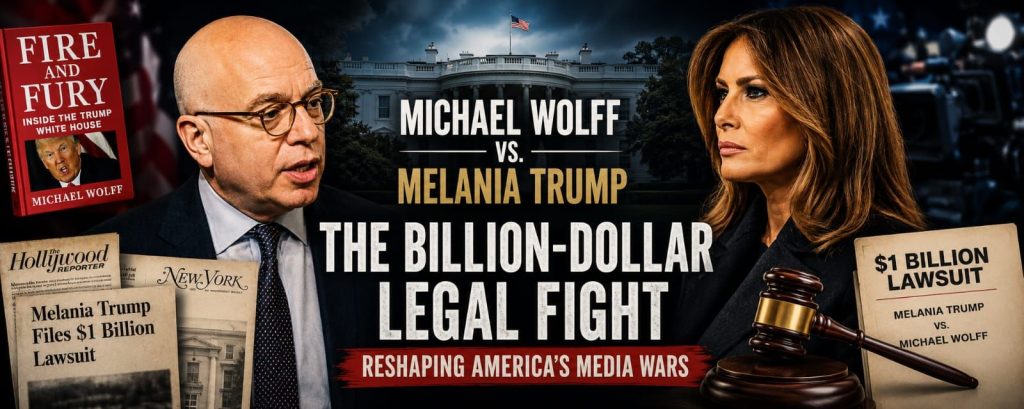
Michael Wolff vs Melania Trump Lawsuit: Inside the Billion-Dollar Legal Battle
A dramatic courtroom battle involving author Michael Wolff and Melania Trump has turned into one of the most explosive media-law stories of 2026. But beyond the headlines, the case reveals something bigger — how political power, celebrity culture, and journalism are colliding in modern America.
This week, a federal judge dismissed Wolff’s unusual legal attempt to stop Melania Trump from suing him before she officially filed a case. The ruling immediately sparked debate across political and media circles because it centered on accusations connected to disgraced financier Jeffrey Epstein and questions about free speech protections for reporters.
How the Conflict Began
The legal dispute traces back to comments made by Michael Wolff during interviews and podcast appearances in which he discussed old social connections involving Trump-era figures and Jeffrey Epstein. Wolff suggested that Melania Trump had historical ties to Epstein’s social network and hinted at controversial claims regarding how she first met Donald Trump.
Melania Trump’s attorneys quickly responded with a legal threat reportedly demanding a retraction and warning of a possible $1 billion defamation lawsuit. According to court filings and media reports, her legal team described Wolff’s statements as “false” and damaging to her reputation.
Wolff’s Unusual Legal Strategy
Rather than defending himself in a future defamation case, Wolff filed a preemptive lawsuit in New York federal court. His argument was that his comments were protected under free speech and anti-SLAPP laws legislation designed to stop wealthy or powerful figures from using lawsuits to silence critics.
Wolff also claimed the legal threat itself was meant to intimidate journalists and discourage reporting involving the Trump family and Epstein-related allegations. The move immediately drew national attention because legal experts described it as highly aggressive and uncommon in high-profile media disputes.
Judge Rejects the Case
Federal Judge Mary Kay Vyskocil ultimately dismissed Wolff’s lawsuit, criticizing both sides for what she called legal “gamesmanship.” The judge ruled that federal courts cannot be used to pre-litigate a hypothetical future case before formal claims are filed.
Importantly, the ruling did not determine whether Wolff’s comments were true or defamatory. Instead, the court focused only on procedure. That means Melania Trump still has the option to pursue a separate defamation lawsuit in another court if she chooses.
Why This Story Became So Explosive
The case quickly expanded beyond a normal celebrity lawsuit because it touched several politically sensitive subjects at once: Jeffrey Epstein’s long-running network of elite connections Donald Trump-era political controversies The role of investigative journalism Billion-dollar defamation threats Free speech protections in modern media
The situation intensified further after renewed public discussion around old FBI documents, media reports, and online speculation concerning Epstein’s social circles from the late 1990s and early 2000s. Melania Trump publicly denied having any relationship with Epstein or Ghislaine Maxwell earlier this year, calling such claims false and politically motivated.
The Bigger Media Impact
For many legal analysts, the dispute is becoming a test case for how modern defamation battles may evolve in the social media era. Public figures increasingly use massive financial threats to challenge journalists, authors, podcasters, and independent media voices. At the same time, critics argue that sensational accusations involving public figures can spread rapidly online before facts are fully verified.
Wolff himself remains a controversial figure in American journalism. Known for books like Fire and F perury, he has built a reputation for publishing insider accounts about Donald Trump and political elites. Supporters see him as a fearless investigative writer, while critics accuse him of relying heavily on anonymous sourcing and provocative storytelling.