
Strait of Hormuz Oil Supply: Global Energy Crisis & Oil Market Impact
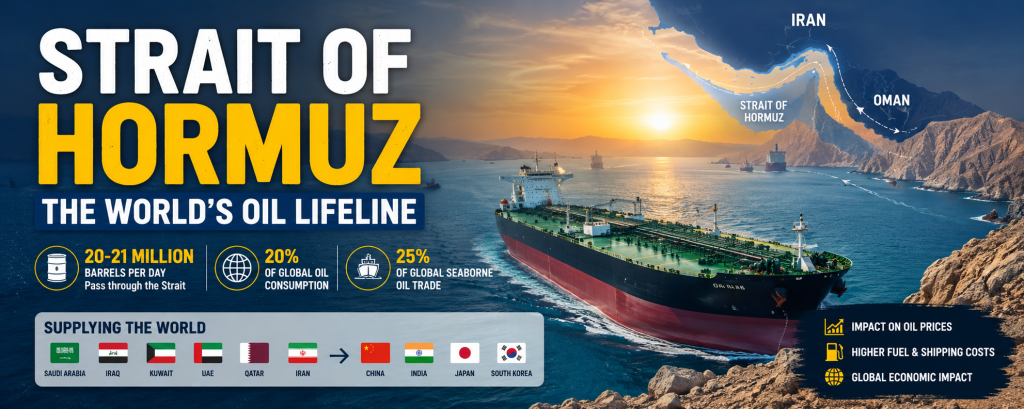
The Strait of Hormuz is one of the most important energy corridors in the world. Located between Iran and Oman, this narrow waterway connects the Persian Gulf to the Arabian Sea and serves as the main route for oil exports from major Middle Eastern producers.
Every day, millions of barrels of crude oil and petroleum products pass through the Strait of Hormuz, making it a critical artery for the global economy. Any disruption in this region can instantly affect oil prices, fuel costs, and international trade.
Why the Strait of Hormuz Matters
The Strait of Hormuz is only about 33 kilometers wide at its narrowest point, but its economic importance is enormous. Around one-fifth of the world’s oil supply moves through this route daily. Countries heavily dependent on this shipping lane include: Saudi Arabia Iraq Kuwait United Arab Emirates Qatar Iran
These nations export crude oil mainly to Asian markets such as China, India, Japan, and South Korea. Because so much oil travels through this narrow passage, even minor geopolitical tensions can create global concerns about energy security.
How Much Oil Passes Through the Strait?
Energy analysts estimate that approximately 20 to 21 million barrels of oil move through the Strait of Hormuz every day. This represents nearly 20% of global petroleum consumption. In addition to crude oil, liquefied natural gas (LNG) shipments also depend on the strait. Qatar, one of the world’s leading LNG exporters, relies heavily on this route for international deliveries.
Impact on Global Oil Prices
Whenever tensions rise in the Middle East, oil markets react quickly. Traders fear supply disruptions, leading to sudden increases in crude oil prices. A disruption in the Strait of Hormuz could lead to: Higher gasoline and diesel prices Increased shipping and transportation costs Inflation in global markets Supply chain disruptions Energy shortages in importing countries Oil-importing nations carefully monitor developments in the region because their economies can be affected within hours.
Why Investors Watch the Region Closely
Financial markets consider the Strait of Hormuz a major geopolitical risk zone. Investors track military activity, tanker movements, and diplomatic relations between Gulf countries and Iran. If shipping traffic slows or stops, global energy companies, airlines, logistics firms, and manufacturing industries may face rising operational costs. Stock markets often become volatile when headlines mention threats to oil infrastructure or tanker security in the Gulf region.
Alternative Oil Routes
Some Gulf countries have invested in pipelines that bypass the Strait of Hormuz. Saudi Arabia and the United Arab Emirates have developed alternative export routes to reduce dependence on the strait. However, these pipelines cannot fully replace the massive oil volume transported by sea through Hormuz. This means the waterway remains essential to global energy stability.
Strategic Importance for India and Asia
Asian economies depend heavily on Middle Eastern energy supplies. India imports a large share of its crude oil from Gulf nations, making the Strait of Hormuz strategically important for the country’s economy. Any long-term disruption could increase fuel prices, transportation expenses, and inflation across Asia. China, Japan, and South Korea also rely on stable oil shipments through the region to support industrial production and economic growth.