
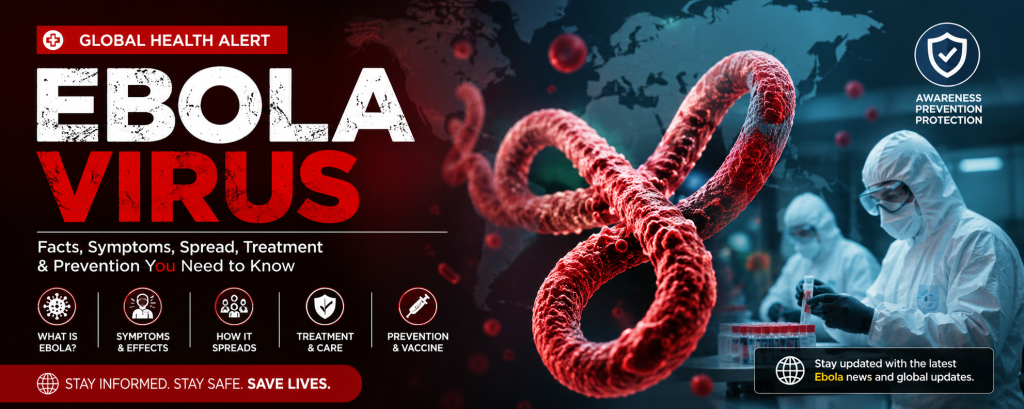
Ebola Virus Explained: Symptoms, Spread, Treatment & Global Health Impact
The Ebola virus remains one of the most dangerous infectious diseases ever discovered. Known for causing severe illness and high fatality rates, Ebola has triggered multiple outbreaks over the years, especially in parts of Africa. Health experts continue to monitor the virus closely because of its potential to spread rapidly if not controlled early.
Although modern medicine and vaccines have improved outbreak response, Ebola still represents a major global health concern. Public awareness, early diagnosis, and quick medical intervention are critical in reducing deaths and preventing wider transmission.
What Is the Ebola Virus?
Ebola virus disease (EVD) is a severe viral infection caused by the Ebola virus, which belongs to the Filoviridae family. The disease was first identified in 1976 near the Ebola River in the Democratic Republic of the Congo.
The virus primarily affects humans and nonhuman primates such as monkeys and chimpanzees. Ebola attacks the immune system and damages blood vessels, which can lead to internal bleeding, organ failure, and death in severe cases.
How Does Ebola Spread?
Ebola spreads through direct contact with infected bodily fluids. Unlike airborne viruses, Ebola does not spread through casual breathing in open environments.
Common Transmission Sources
- Blood from infected individuals
- Saliva, sweat, urine, or vomit
- Contaminated medical equipment
- Contact with infected animals
- Unsafe burial practices during outbreaks
Healthcare workers and family members caring for infected patients face the highest risk if protective measures are not followed.
Symptoms of Ebola Virus Disease
Symptoms usually appear between 2 and 21 days after exposure. Early symptoms can resemble common illnesses, making diagnosis difficult during the first stages.
Early Symptoms
- High fever
- Severe headache
- Sore throat
- Muscle pain
- Weakness and fatigue
Advanced Symptoms
- Vomiting and diarrhea
- Skin rash
- Chest pain
- Internal and external bleeding
- Organ failure
Without timely medical treatment, the condition can become life-threatening very quickly.
Why Ebola Is So Dangerous
One reason Ebola is feared worldwide is its high fatality rate. Depending on the outbreak and healthcare conditions, fatality rates can range from 25% to 90%.
The virus spreads rapidly in areas with weak healthcare systems, limited sanitation, and poor access to protective medical equipment. During major outbreaks, hospitals can become overwhelmed, increasing the risk of further infections. Ebola outbreaks also create economic and social disruption, affecting schools, businesses, transportation, and international travel.
Ebola Outbreaks Around the World
The most devastating Ebola outbreak occurred in West Africa between 2014 and 2016, affecting countries such as Guinea, Liberia, and Sierra Leone. Thousands of people lost their lives, and the outbreak drew worldwide attention.
Since then, smaller outbreaks have continued to occur in Central Africa. International health organizations including the World Health Organization (WHO) and the Centers for Disease Control and Prevention (CDC) regularly monitor new cases and support emergency response efforts.
Ebola Treatment and Medical Care
There is no single universal cure for Ebola, but early supportive treatment greatly increases survival chances. Treatment Methods Intravenous fluids and hydration Oxygen support Blood pressure stabilization Treatment for secondary infections Experimental antiviral therapies Medical teams use isolation units and protective equipment to prevent hospital-based transmission.
Ebola Vaccines Bring Hope
Scientists have made major progress in vaccine development over the past decade. Vaccines used during recent outbreaks have helped reduce transmission and protect healthcare workers.
Vaccination campaigns are especially important in high-risk regions where outbreaks occur frequently. Rapid vaccination combined with contact tracing has improved outbreak control significantly.
How to Prevent Ebola Infection
Prevention remains the best defense against Ebola. Important Prevention Steps Avoid direct contact with infected individuals Use protective medical equipment Practice proper hand hygiene Avoid handling infected animals Follow safe burial procedures Report symptoms immediately during outbreaks Public awareness campaigns play a major role in limiting the spread of the virus.
Global Health Impact of Ebola
Ebola has changed how the world prepares for infectious disease emergencies. Governments and health agencies now invest more heavily in disease surveillance, emergency response systems, and vaccine research.
The virus also highlighted the importance of international cooperation during health crises. Rapid information sharing and coordinated medical responses are essential for containing outbreaks before they become global threats.