US Gas Prices Surge as Mike Johnson Warns of Economic Pressure Ahead of Midterms
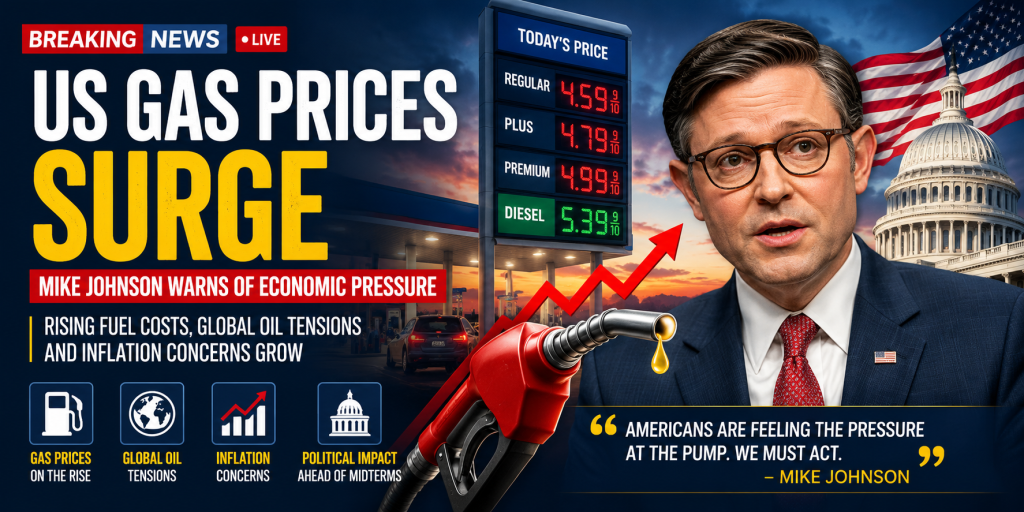
Rising fuel prices are once again becoming a major political and economic issue in the United States, with House Speaker Mike Johnson publicly highlighting concerns about how higher gas costs could affect American families and Republican election prospects in 2026.
The warning comes as gasoline prices continue climbing across the country following escalating tensions in the Middle East and ongoing disruptions linked to the Strait of Hormuz — one of the world’s most important oil shipping routes. Analysts say the situation could heavily impact inflation, transportation costs, and consumer confidence heading into the summer travel season.
Why US Gas Prices Are Rising
Fuel markets have been shaken by geopolitical instability after the Iran conflict intensified earlier this year. Global oil supplies faced pressure as shipping activity near the Strait of Hormuz slowed dramatically, causing crude oil prices to jump worldwide.
According to recent reports, the national average gasoline price in the United States has climbed above $4.50 per gallon in several states — levels not seen since the 2022 energy spike. Economic experts warn that higher oil prices often trigger broader inflation because transportation affects nearly every industry, from groceries and airline tickets to online deliveries and manufacturing.
Mike Johnson Signals Republican Concerns
Speaker Mike Johnson and several Republican leaders are reportedly worried that prolonged fuel inflation could damage voter confidence before the upcoming midterm elections. Political analysts believe rising living costs remain one of the biggest concerns for American households.
Recent polling cited by U.S. media outlets shows that many Americans are increasingly frustrated with affordability issues, especially gas and food prices. Some Republican lawmakers fear the economic pressure may weaken support in key battleground states
Johnson recently appeared during a Washington press conference focused on inflation and energy costs, emphasizing that Republicans must address public frustration surrounding gasoline prices.
Trump Pushes Federal Gas Tax Suspension
Meanwhile, President Donald Trump has backed a temporary suspension of the federal gasoline tax in an attempt to reduce pressure on consumers. The proposal would pause the 18.4-cent federal gas tax for a limited period if approved by Congress.
Republican Senator Josh Hawley has already announced plans to introduce legislation supporting a 90-day suspension for gasoline and diesel taxes. However, some lawmakers remain cautious because fuel taxes help fund national infrastructure and highway projects. Energy experts say the tax pause may provide only limited short-term relief if global oil supply disruptions continue.
Americans Feeling the Impact
Across the U.S., higher gas prices are beginning to affect everyday spending habits. Families are cutting back on travel, while businesses dependent on transportation are facing higher operating expenses.
Airlines have also reported pressure from rising jet fuel prices, and economists warn that continued energy inflation could slow consumer spending later this year. Political strategists now believe fuel prices may become one of the defining economic issues of the 2026 election cycle, especially if inflation remains elevated through the summer months.
Global Energy Markets Remain Uncertain
Oil traders are closely watching developments in the Middle East as governments attempt to stabilize supply chains. Any further disruption in the Strait of Hormuz could push prices even higher globally.
For now, U.S. officials continue discussing emergency energy measures, including potential reserve releases and temporary tax relief, while consumers hope prices at the pump begin easing soon.