
DHS Funding Bill Still Stalled as House Delays Final Vote — Live Updates 2026
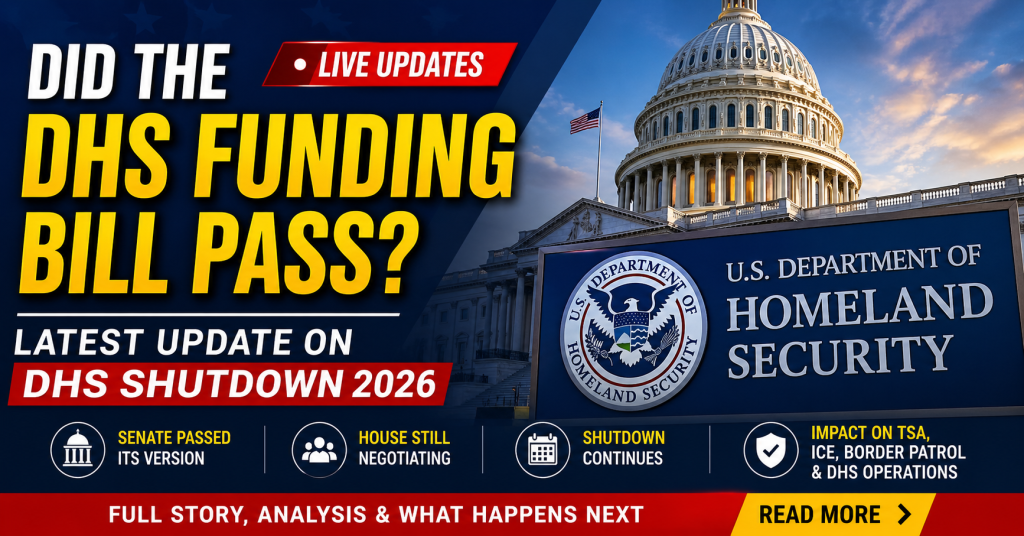
The U.S. Department of Homeland Security (DHS) funding crisis continues as lawmakers remain locked in a political standoff. While the Senate has already approved funding measures, the House of Representatives has yet to pass the final version, leaving the department in a prolonged partial shutdown. This ongoing dispute has become one of the longest DHS shutdown situations in U.S. history.
Senate Passed a Version — But House Still Delaying
The U.S. Senate has passed several funding steps intended to reopen DHS operations, including budget measures to fund immigration enforcement agencies such as Immigration and Customs Enforcement (ICE) and Border Patrol. However, the House is planning to modify the Senate’s bill, which means the legislation must go back to the Senate again before becoming law.
House leaders have expressed concerns that the Senate version does not fully address funding needs for key immigration enforcement programs. Because of these differences, lawmakers are still negotiating, delaying final approval.
Partial Shutdown Continues to Impact DHS Operations
The DHS shutdown has now lasted for more than ten weeks, making it one of the longest shutdowns affecting homeland security operations. Agencies such as the Transportation Security Administration (TSA), Federal Emergency Management Agency (FEMA), and Coast Guard have faced staffing and funding challenges during the crisis.
Officials have warned that emergency funding resources may soon run out if Congress fails to pass a final bill. Without funding, essential services related to airport security, disaster response, and border protection could be affected.
Political Disagreements Driving the Delay
The main issue behind the funding delay centers on immigration enforcement policies. Republican lawmakers are pushing for expanded funding for border enforcement agencies, while many Democratic leaders want policy reforms and oversight measures before approving new funding. This political divide has prevented lawmakers from agreeing on a unified version of the bill, prolonging the shutdown and increasing pressure on both parties to compromise.
What Happens Next?
If the House passes a revised version of the bill, it must return to the Senate for another vote. Only after both chambers approve identical legislation can the President sign the bill into law and officially reopen DHS operations. Lawmakers are under growing pressure to act quickly, as national security concerns and agency funding shortages continue to rise.
As of April 28, 2026, the DHS funding bill has not fully passed Congress. The Senate has taken major steps toward funding, but the House’s proposed changes have delayed final approval. Until both chambers agree on the same version of the bill, the Department of Homeland Security will remain partially shut down, affecting thousands of employees and critical national security operations.