Iran Cuts Off Direct Diplomacy With United States Amid Rising Tensions
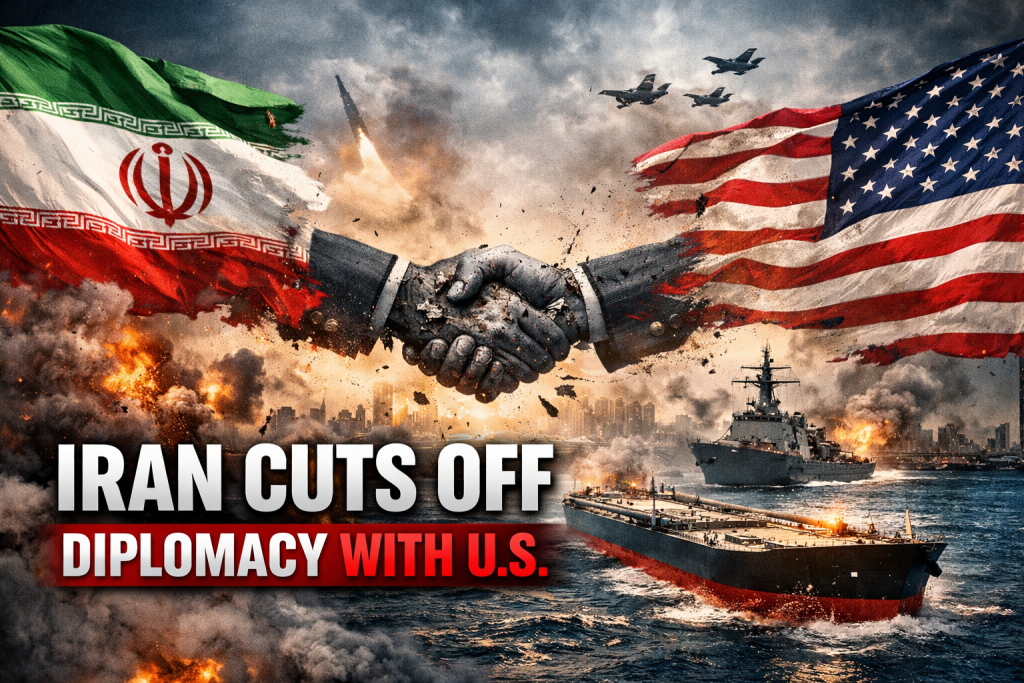
Iran has officially cut off direct diplomatic communication with the United States, marking a major escalation in tensions between the two countries as global leaders call for restraint and renewed peace talks. The move comes after strong statements from U.S. President Donald Trump, who issued a warning threatening severe consequences if Iran failed to meet key demands related to the reopening of the Strait of Hormuz, a vital global shipping route. Iranian officials described the decision to stop direct talks as a signal of disapproval and defiance, though indirect communication channels through mediators are still ongoing.
Why Iran Cut Direct Diplomatic Communication The decision followed rising tensions after President Trump issued a warning that Iran’s actions could lead to devastating consequences, including threats to critical infrastructure. Reports indicate that Iran viewed the statements as highly provocative and responded by suspending direct diplomatic contact with Washington. However, diplomatic efforts have not completely stopped. Officials confirmed that indirect negotiations through mediators are continuing behind the scenes to prevent further escalation.
Two-Week Ceasefire Brings Temporary Relief Despite the diplomatic breakdown, a two-week ceasefire agreement has been reached between the United States and Iran, offering temporary relief to global markets and regional stability. Under the agreement: The United States agreed to suspend military attacks for two weeks. Iran committed to ensuring safe passage through the Strait of Hormuz. International mediators, including regional allies, helped facilitate the agreement. European leaders welcomed the ceasefire, calling it a critical step toward preventing a full-scale war and urging both sides to continue negotiations.
Global Impact: Markets, Oil, and Security The crisis has had a major impact on global markets, especially oil prices and shipping routes. The Strait of Hormuz, which handles a significant portion of global oil shipments, has been a central issue in the conflict. Disruptions in this region have already caused sharp fluctuations in oil prices and shipping delays. Financial markets reacted quickly to the ceasefire announcement, with stocks rising and crude oil prices falling as fears of escalation temporarily eased.
What Happens Next Experts believe the situation remains extremely fragile. While direct diplomacy has been halted, the continuation of indirect talks suggests both sides are still exploring diplomatic solutions. Key developments expected in the coming days include: Further mediated negotiations between U.S. and Iranian officials Possible extension of the ceasefire Renewed discussions on nuclear and regional security issues Monitoring of shipping safety in the Strait of Hormuz The outcome of these talks could determine whether the region moves toward peace or deeper conflict.
International Reaction World leaders and international organizations have urged restraint from both sides. Several global powers have expressed support for ongoing mediation efforts and warned that any renewed military escalation could destabilize the broader Middle East and global energy markets. Iran’s decision to cut off direct diplomacy with the United States marks a serious turning point in international relations, highlighting the fragile nature of ongoing negotiations. While indirect talks and a temporary ceasefire offer hope for de-escalation, the situation remains highly unpredictable.