







The Battle of Galwan, also known as the Galwan Valley Clash, remains one of the most significant military confrontations between India and China in modern history. The violent clash on 15 June 2020 not only resulted in tragic loss of life but also reshaped diplomatic, military, and geopolitical relations between the two Asian giants. Even today, Galwan stands as a symbol of bravery, tension, and unresolved border disputes along the Line of Actual Control (LAC).
What Triggered the Galwan Clash? The conflict was the result of rising tensions in Eastern Ladakh, where both India and China accused each other of violating border agreements and attempting to alter the status quo at the LAC. Chinese attempts to build new structures and block Indian patrols. Disagreement over the patrolling rights near Patrolling Point 14 (PP-14) Breakdown in communication despite ongoing de-escalation talks Long-standing territorial claims in the Galwan region
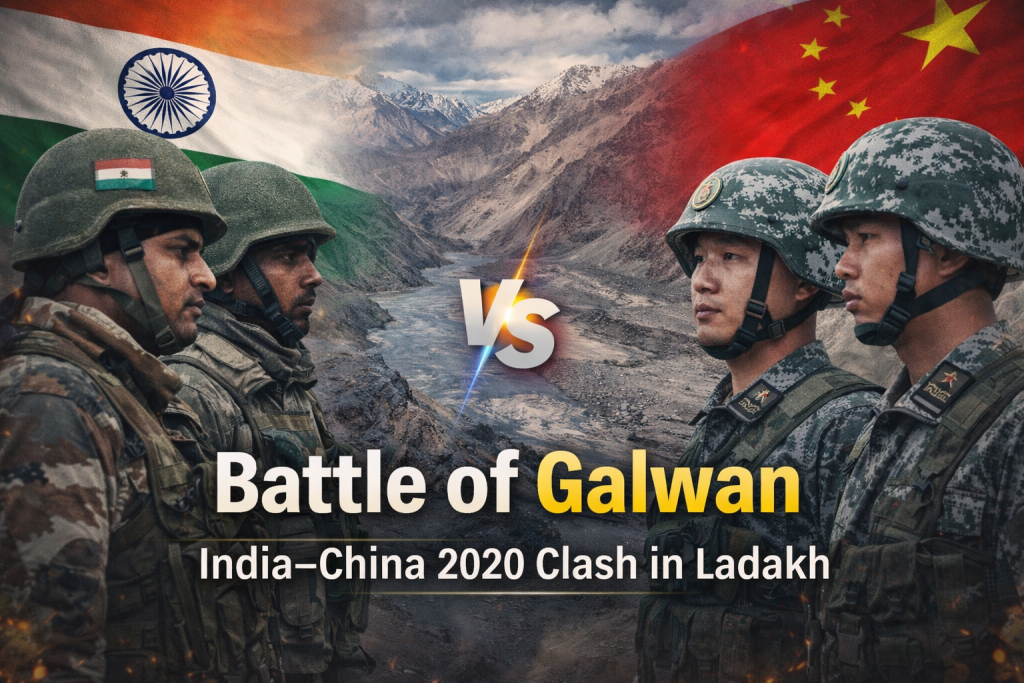
How the Battle of Galwan Unfolded On 15 June 2020, Indian and Chinese soldiers confronted each other during the verification of disengagement. Due to prior treaties, no firearms were used. Instead, the fight involved: Stones Iron rods Nail-studded clubs Close-quarters hand-to-hand combat The battle occurred along steep cliffs and near the freezing Galwan River, making the terrain extremely dangerous.
Casualties in the Galwan Clash India 20 soldiers were martyred, including Colonel Santosh Babu, Commanding Officer of 16 Bihar Regiment Several soldiers lost their lives due to hypothermia after falling into the icy river China China officially admitted 5 PLA soldiers dead. Independent reports and satellite analysis suggest the toll may have been higher. This was the first lethal confrontation between India and China in 45 years
India’s Military and Strategic Response Military Reinforcement Deployment of thousands of additional troops to Eastern Ladakh. Occupation of key heights in the Kailash Range during August 2020. Enhanced surveillance, drones, and rapid infrastructure buildup Diplomatic & Economic Actions 200 Chinese apps (including TikTok) banned Strengthened global partnerships (QUAD, US cooperation). Continued high-level military talks to ensure disengagement
DIGI MERCH STORE PRINT ON DEMAND

Aftermath and Current Status Over 15 rounds of Corps Commander-level talks have taken place. Troops have disengaged in certain friction points: Galwan, Pangong Tso (north and south bank), Gogra-Hot Springs. However, full de-escalation has not been achieved, and both armies remain heavily deployed. The region remains one of the most sensitive military zones in the world.
Why the Battle of Galwan Is Historically Important First border fatalities since 1975. Triggered a major shift in India–China relations Highlighted the need for stronger border infrastructure. Raised global focus on China’s territorial strategies. Boosted India’s preparedness in high-altitude warfare This was not just a border skirmish; it was a turning point in the strategic landscape of Asia. The bravery of the soldiers in the valley will be etched in history for years to come.
GalwanValleyincident LatestGadgets
GalwanValleystandoff WearableTech
BordertensionLadakh productcatlog
GalwanValleyupdates OutdoorGear
Galwansoldierstribute SmartHome
Comment