
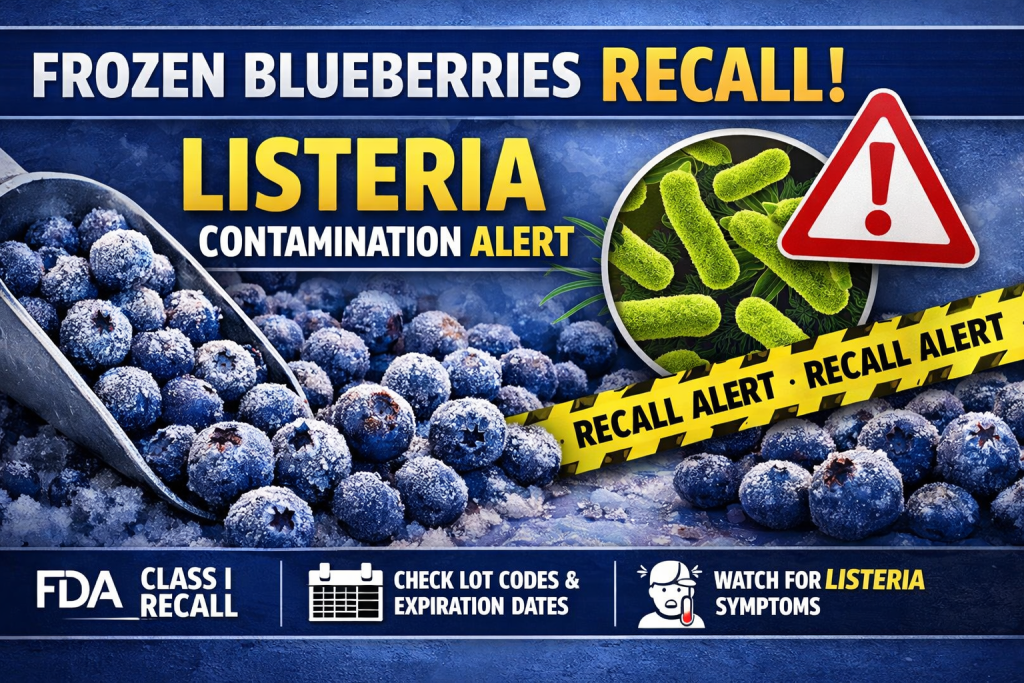
Urgent Food Safety Alert: Frozen Blueberries Recalled Due to Listeria Risk
In a significant food safety development, federal authorities in the United States have issued a major recall of frozen blueberries after detecting a risk of contamination with Listeria monocytogenes a dangerous harmful bacterium. This recall was recently upgraded to the most serious risk category by the U.S. Food and Drug Administration (FDA), signaling potential life-threatening consequences if the affected blueberries are consumed.
What Happened On February 12, 2026, the Oregon Potato Company LLC, doing business as Willamette Valley Fruit Company, voluntarily recalled a large shipment of frozen blueberries after internal testing suggested the possible presence of Listeria monocytogenes Initially a standard product withdrawal, the recall was escalated on February 24, 2026 when the FDA classified it as a Class I recall the highest level of recall used by the agency. A Class I designation means there is a reasonable probability that eating the recalled product could cause serious adverse health consequences or even death.
What Products Are Affected The recall includes approximately 55,689 pounds (nearly 60,000 pounds) of individually quick-frozen (IQF) blueberries produced and distributed by Willamette Valley Fruit Company. These blueberries were packaged in two formats 30-pound corrugated cases 1,400-pound bulk industrial totes The affected products were sent to various customers in Michigan, Oregon, Washington, Wisconsin, and also Canada. Importantly, these blueberries were not sold directly to retail consumers, but rather to food service distributors and businesses
Why Listeria Matters Listeria monocytogenes is a pathogenic bacterium that can cause listeriosis, a serious infection that can lead to a range of health problems from mild flu-like symptoms to severe complications. The Centers for Disease Control and Prevention (CDC) notes that Listeria can survive freezing, making frozen foods particularly risky if contaminated Symptoms can develop within hours to weeks after exposure Vulnerable groups including pregnant women, newborns, older adults, and those with weakened immune systems — are at especially high risk of severe illness, hospitalization, and even death.
Who Is At Risk Because the recalled blueberries were not sold directly in retail stores, the general public at the consumer level is less likely to have them in their household freezers. However, food manufacturers, restaurants, and distributors that received bulk shipments may have these products on hand. Not consume the blueberries Dispose of them safely according to food safety guidelines. Contact the supplier or manufacturer for return or refund instructions
Signs and Symptoms to Watch For If you suspect exposure to contaminated blueberries, watch for symptoms such as Fever and chills Muscle aches Nausea or diarrhea Headache or stiff neck Confusion or loss of balance Seek medical attention immediately, especially if you belong to a high-risk group or develop severe symptoms. Early treatment can prevent complications. This recall highlights the importance of ongoing food safety monitoring and vigilant testing throughout the supply chain from production facilities to distributors
Even frozen products, which many consumers view as safe long-shelf foods, can pose a risk if contaminated during processing or handling. Stay informed by following FDA recall notices and public health advisories. Regularly check lot codes, best-by dates, and product sources when you receive or serve bulk food items in commercial settings…




Hi there to all, for the reason that I am genuinely keen of reading this website’s post to be updated on a regular basis. It carries pleasant stuff.