

U.S. Military Builds Up Assets in the Middle East as Iran Deal Negotiations Continue
Tensions are rising across the Middle East as the United States strengthens its military presence while diplomatic negotiations with Iran remain ongoing. The simultaneous pursuit of diplomacy and military preparedness reflects a high-stakes strategy aimed at preventing escalation while maintaining leverage at the negotiating table.
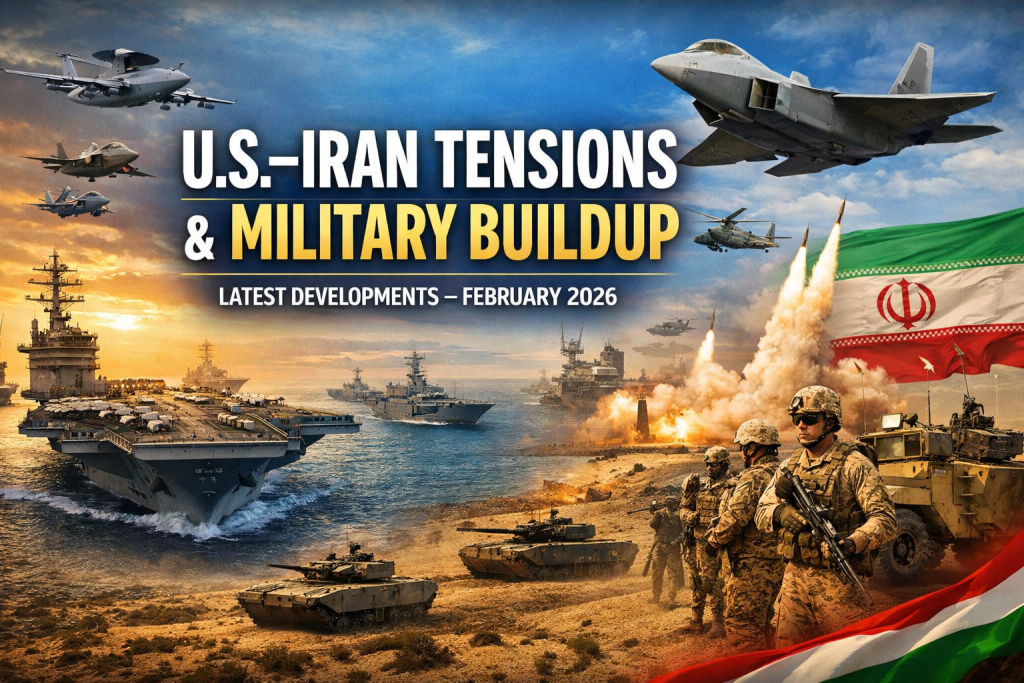
Growing U.S. Military Presence in the Region In recent weeks, the United States has repositioned significant naval and air assets across strategic waterways, including the Persian Gulf. Aircraft carrier strike groups, advanced fighter jets, missile defense systems, and additional logistical support units have been deployed or placed on heightened alert. The buildup includes increased aerial surveillance, refueling aircraft, and enhanced defensive systems to protect U.S. forces and allied nations in the region. While Pentagon
officials describe these moves as precautionary and defensive, analysts note that such deployments also provide rapid-response capabilities should diplomacy collapse. Approximately tens of thousands of U.S. troops are already stationed at bases across the region. The reinforcement signals readiness without necessarily indicating imminent conflict. Why the Buildup Is Happening The military reinforcement comes at a sensitive moment. Negotiations over Iran’s nuclear program have resumed in indirect talks
with diplomatic discussions reportedly taking place in locations such as Geneva. While both sides have expressed cautious optimism, major disagreements remain over uranium enrichment levels, sanctions relief, and verification mechanisms. Officials from the White House have emphasized that diplomacy remains the preferred path. However, they have also made it clear that “all options remain on the table,” signaling that the military buildup is intended to strengthen the U.S. negotiating position.
Strategically, the deployment serves three key purposes: Deterrence – To discourage Iran from escalating tensions or targeting U.S. forces and regional allies. Leverage in Talks – To increase diplomatic pressure during nuclear negotiations. Rapid Response Readiness – To ensure immediate operational capability if talks fail. Iran’s Response and Regional Impact Iran has responded with its own military exercises, including naval drills near the critical Strait of Hormuz, a chokepoint through which a significant portion of the world’s oil supply passes. These exercises are
widely interpreted as signals of Tehran’s readiness to defend its interests. Regional countries are closely monitoring the situation. Some Gulf states have maintained cautious neutrality, while Israel has strongly supported increased pressure on Iran, viewing its nuclear ambitions as a direct security threat. The risk of miscalculation remains high. Even minor incidents—such as naval encounters or drone interceptions—could rapidly escalate in such a tense environment.
Diplomacy vs. Deterrence: A Delicate Balance The current strategy reflects a dual-track approach: pursue negotiations while maintaining overwhelming military readiness. Historically, similar strategies have been used to strengthen bargaining positions in high-risk geopolitical disputes. However, this approach carries inherent risks. A strong military presence can deter aggression, but it can also increase the likelihood of accidental confrontation. Diplomatic breakthroughs are still possible, but the window for compromise may narrow if tensions continue to rise.
What Happens Next Iran’s willingness to limit nuclear activities The scope of sanctions relief offered by the United States Regional security assurances for U.S. allies Internal political pressures within both countries. The ongoing situation highlights the fragile balance between diplomacy and military preparedness. As negotiations with Iran continue, the United States is reinforcing its presence in the Middle East to deter aggression and maintain leverage. Whether this strategy leads to a renewed nuclear agreement or heightened confrontation will depend on the coming weeks of diplomacy.