The U.S. and Israel Launch Major Military Strikes on Iran — A New Chapter in Middle East Conflict
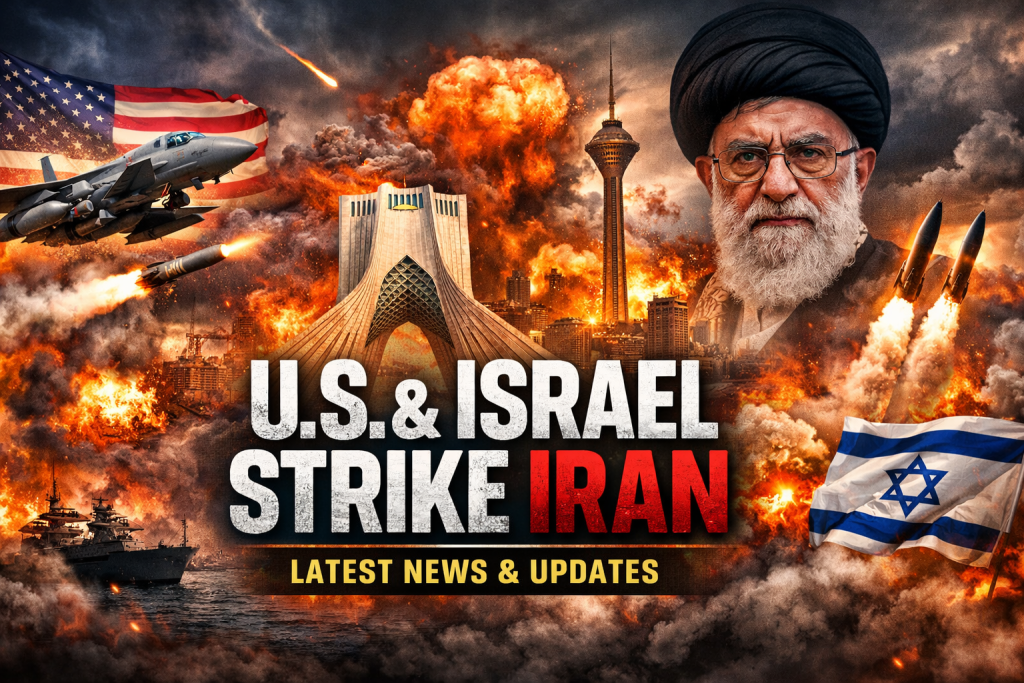
On February 28, 2026, the United States and Israel launched a large-scale coordinated military attack on Iran, marking one of the most dramatic escalations in Middle Eastern tensions in recent decades. The offensive, quickly named by U.S. forces as Operation Epic Fury, targeted Iranian military and strategic infrastructure, sending shockwaves across the region and triggering immediate retaliatory strikes. Why This Happened The attack followed months of rising tensions between Tehran and Washington, driven by long-standing disputes over Iran’s nuclear programme, ballistic missile development, and
regional influence through allied militias. In early 2026, diplomatic negotiations aimed at limiting Iran’s nuclear capabilities collapsed, with the U.S. issuing ultimatums that Iran did not meet U.S. officials claimed that the strikes were pre-emptive and necessary to neutralise what they described as imminent security threats, including nuclear and missile facilities. The United States also framed the operation as an opportunity for internal political change in Iran, with President Donald Trump urging Iranian citizens to rise up and “take over your government. Israeli leaders described the
strikes as essential to eliminate Tehran’s capacity to threaten Israel’s security and to degrade Iran’s military infrastructure The Operation and Its Scope The coordinated offensive began with waves of air and missile strikes across Iran, especially concentrated in the capital, Tehran, and other strategic locations. Reports indicate that facilities including military headquarters, missile bases, naval installations, nuclear-related sites, and command and control centres were hit. Explosions across Tehran and other cities caused widespread alarm among civilians, with streets filled with smoke and
smoke and residents rushing to seek shelter. Many people attempted to leave urban centres amid warnings of continuing attacks There are conflicting reports regarding the fate of Iran’s top leadership. Iranian officials stated that Supreme Leader Ayatollah Ali Khamenei survived the initial attacks, although the precise situation remains unclear. Iran’s Retaliation Iran did not remain passive. Within hours, Iranian military forces launched missile and drone strikes targeting United States military bases and allied facilities across the Middle East. These strikes extended to U.S.
installations in Bahrain, Kuwait, the UAE, Qatar, and beyond, dramatically widening the theatre of conflict. The Iranian government described its response as a legitimate defence of its sovereignty and vowed “no leniency” against what it called an unprovoked act of aggression. Human Impact The human toll of the strikes began to emerge almost immediately. In Iran, explosions were reported in cities beyond Tehran, causing civilian casualties. In one reported incident, at least 40 schoolchildren were killed in a strike on a girls’ school in southern Iran, according to state media.
Retaliatory Iranian strikes also resulted in casualties in the region, including a reported death from falling debris in the United Arab Emirates. International Reactions Russia condemned the strikes as “unprovoked aggression” and appealed for an immediate end to hostilities, warning of dire humanitarian and geopolitical consequences. European governments and global institutions expressed alarm and called for restraint and diplomatic engagement. Some nations supportive of Iran’s security stance criticised U.S. and Israeli actions as violations of international law.
Regional and Global Implications The strikes come against a backdrop of already heightened instability in the Middle East. The conflict risks escalating further, drawing in regional powers and potentially affecting global oil markets due to Iran’s position as a major energy producer. Military analysts warn that what began as a targeted operation could develop into a protracted regional war with unpredictable consequences for civilian populations and international security alike.
The joint U.S.–Israeli strikes on Iran represent a pivotal moment in Middle Eastern geopolitics. Instead of resolving the longstanding disputes, they have opened a new and dangerous chapter in relations between Iran, Western powers, and regional states. With retaliatory actions underway and global diplomatic efforts intensifying, the situation remains extremely fluid and could have long-term consequences for peace and stability in the region and beyond.