The Death of Ayatollah Ali Khamenei: A Turning Point in Middle Eastern History
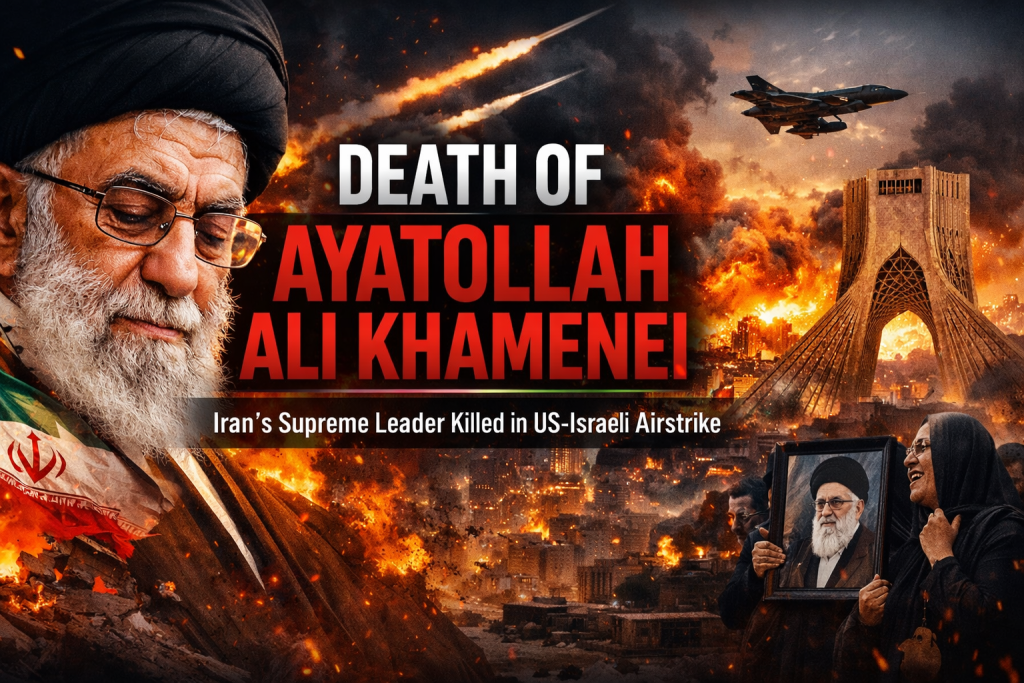
In a dramatic and unprecedented development on 28 February 2026, Ayatollah Ali Khamenei, the Supreme Leader of the Islamic Republic of Iran since 1989, was killed in a coordinated military strike by the United States and Israel, marking one of the most consequential geopolitical events in decades. Khamenei’s death was confirmed on 1 March 2026 by Iranian state media, which announced that the 86-year-old leader had been killed and that the nation would observe 40 days of mourning and seven days of public holiday. Earlier hours before Tehran’s broadcast, U.S. President Donald Trump declared on social media that
Khamenei had been “one of the most evil people in history” and was dead following joint U.S.-Israeli strikes aimed at Iran’s leadership and military targets. Who Was Ali Khamenei Ayatollah Ali Khamenei was one of the most powerful political figures in the Middle East. Born in 1939 in Mashhad, Iran, he rose through the ranks of the clerical establishment and joined Ayatollah Ruhollah Khomeini’s revolutionary movement opposing the Shah in the 1960s. After the 1979 Islamic Revolution, Khamenei held several high-level roles, including deputy defense minister, and was an
architect of Iran’s paramilitary force, the Islamic Revolutionary Guard Corps (IRGC). In 1989, following Khomeini’s death, Khamenei was chosen by the Assembly of Experts to succeed him as Supreme Leader the highest authority in Iran, with control over the armed forces, judiciary, media, and major state policies. Over more than three decades in power, Khamenei shaped Iran’s domestic and foreign policy, supervising hard-line stances towards Western powers, opposing Israel’s existence, and supporting regional proxy groups. The Strike and Its Immediate
Aftermath The air campaign that led to Khamenei’s death, widely reported in international media as Operation Epic Fury, involved widespread missile and aerial strikes on Iranian infrastructure and leadership complexes including around Tehran. Israeli and U.S. officials stated that Khamenei’s compound was destroyed and that his body was recovered, though specifics on the weaponry and exact chain of events remain classified. Shortly after the announcement, some Iranians reportedly took to the streets celebrating, highlighting deep internal divisions within Iranian society over the
regime National Mourning and Succession Questions In Tehran, state media described Khamenei’s death in reverential terms, calling him a “great scholar” and “mujahid” who sacrificed his life for Iran. The council declared an extended mourning period. Yet the announcement also means Iran now faces a leadership vacuum unlike anything since the Islamic Republic was founded in 1979 Iran’s constitution outlines a succession process involving a temporary council including the president, chief justice, and a clerical jurist until the Assembly of Experts
elects a new Supreme Leader. However, with multiple high-ranking officials reportedly killed in the same strikes, this process could be fraught with political instability and a struggle for influence among Iran’s elite. Regional and Global Implications Khamenei’s death is expected to reshape Middle Eastern geopolitics. Iran’s strong influence in Iraq, Syria, Lebanon (through Hezbollah), and Yemen relied heavily on his decades-long strategy of exporting revolutionary ideology. With that central figure gone, analysts predict short-term uncertainty in the region’s balance
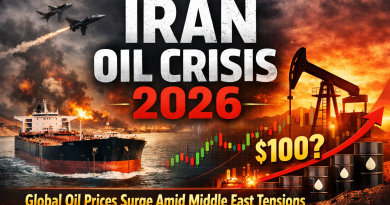
of power, potential escalation of military skirmishes, and volatility in global energy markets due to fears over oil supply routes like the Strait of Hormuz. The U.S. and Israel have framed the strike as a blow against what they called Iran’s destabilizing regional policies and support for militant groups. Meanwhile, many world leaders have called for calm and emphasized diplomatic engagement to prevent a wider conflict. A New Chapter for Iran As Iran enters this historic transition, questions loom large: Will the Islamic Republic continue its current ideological course?
And can regional tensions be contained before drawing neighboring powers into broader conflict? The death of Ayatollah Ali Khamenei once a symbol of continuity and control opens a new and uncertain chapter in Iranian and world history.