
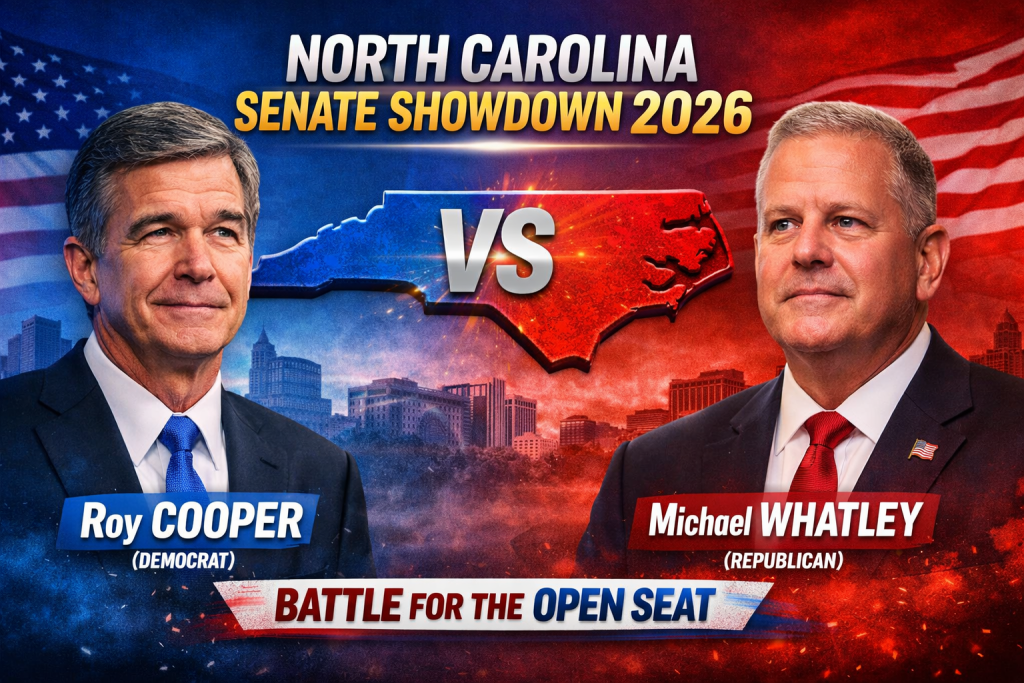
North Carolina Senate Showdown 2026: Roy Cooper vs Michael Whatley in High-Stakes Battle
North Carolina is headed for one of the most closely watched political battles of 2026, as former Governor Roy Cooper and Republican leader Michael Whatley secured their party nominations for the U.S. Senate. The matchup sets the stage for a high-stakes general election that could shape control of the United States Senate. With an open seat on the line, both parties are preparing for a fierce campaign in a state that has become a critical battleground in national politics.
Why This Race Matters The Senate seat is being vacated by retiring Republican Senator the Thom Tillis, creating a rare open contest in North Carolina. Open seats tend to draw intense competition, and this one is no exception. North Carolina has consistently been one of the most competitive states in recent federal elections. While Republicans have performed strongly in presidential races, Democrats have maintained influence at the state level especially in gubernatorial contests. That political split makes this Senate race unpredictable and nationally significant.
Meet the Candidates Roy Cooper brings decades of political experience to the race. Having served multiple terms as governor, he built a reputation as a pragmatic Democrat with crossover appeal. His campaign is expected to focus on: Expanding healthcare access Protecting reproductive rights Strengthening public education Economic development in rural communities Cooper’s statewide name recognition and established donor network give Democrats confidence that he can compete strongly in a swing-state environment.
Michael Whatley (Republican) Michael Whatley, former chair of the Republican National Committee, enters the race with deep ties to national GOP leadership. Known for his focus on election integrity and grassroots organizing, Whatley is expected to run on: Border security Fiscal conservatism Energy independence Support for conservative judicial appointments With strong backing from Republican voters and national party infrastructure, Whatley’s campaign will likely emphasize unity within the GOP base while working to expand outreach to suburban voters.
The Political Landscape North Carolina’s electorate has grown rapidly in recent years, with shifting demographics in urban and suburban areas. Key regions to watch The Research Triangle (Raleigh-Durham-Chapel Hill) Charlotte’s expanding metro area Rural eastern and western counties Turnout among suburban voters, young voters, and independents could determine the final outcome. Both campaigns are expected to attract significant outside funding from national political organizations, making this one of the most expensive Senate races of the cycle.
Key Issues to Watch As the general election campaign unfolds, several major issues are likely to dominate The economy and inflation Healthcare access and Medicaid expansion Immigration policy Energy and environmental regulation National political polarization Voters will be weighing not only state-level concerns but also the broader national direction of Congress What Happens Next The general election will take place in November 2026. Over the coming months, debates, fundraising reports, and polling data will shape the narrative. Both campaigns are
expected to aggressively court independent voters a critical bloc in North Carolina elections This Senate showdown isn’t just about one seat. It’s about the balance of power in Washington and North Carolina voters will once again find themselves at the center of the national political stage.