
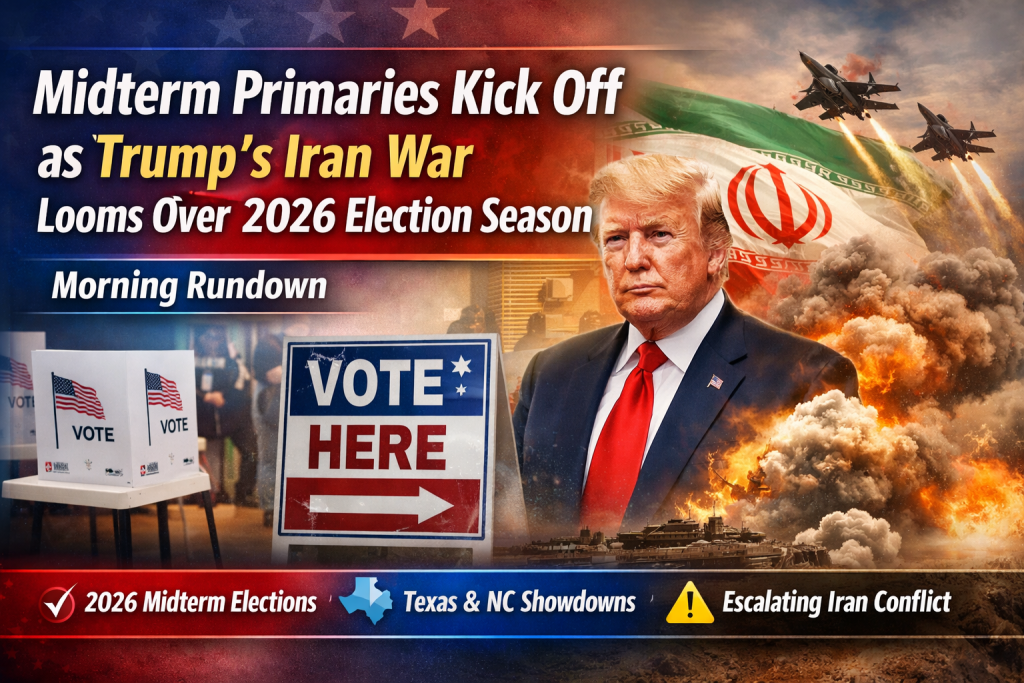
Midterm Primaries Kick Off as Trump’s Iran War Looms Over 2026 Election Season: Morning Rundown
The 2026 midterm election cycle has officially begun, with primary contests launching in key states even as President Donald Trump faces mounting questions over the duration and scope of U.S. military operations against Iran. From high-stakes Senate races in the South to escalating geopolitical tensions in the Middle East, today’s political landscape reflects a nation balancing democracy at home and conflict abroad. Primaries Begin in Key Battleground States Voters in Texas, North Carolina, and Arkansas are casting ballots in some of the first
major primaries of the 2026 midterm season. These races are expected to shape the fight for control of Congress in November. Texas: A GOP Showdown In Texas, a heated Republican Senate primary is drawing national attention. Incumbent Senator John Cornyn faces a fierce challenge from Texas Attorney General Ken Paxton, a staunch Trump ally. On the Democratic side, candidates are vying to position themselves for what could become one of the most competitive general election matchups in years. North Carolina: An Open Seat Battle North Carolina’s open Senate seat
has sparked a high-profile contest. Former Governor Roy Cooper is seen as a potential Democratic frontrunner, while Republicans are consolidating around party leadership figures aligned with Trump’s agenda. Arkansas: Safe but Symbolic In Arkansas, Republican incumbents including Senator and Tom Cotton are expected to secure nominations comfortably. However, turnout and margins here may serve as indicators of base enthusiasm heading into the general election. No Clear End Date to Iran Conflict As Americans head to the polls, global
tensions continue to escalate. President Trump recently addressed the ongoing U.S. military campaign against Iran, outlining strategic objectives but declining to provide a definitive timeline for its conclusion. Neutralizing Iran’s missile capabilities Disrupting naval operations in the Persian Gulf Preventing nuclear weapons development Curtailing regional proxy influence Israeli Prime Minister Benjamin Netanyahu indicated the conflict may last “some time,” though he downplayed the likelihood of a multi-year war. Still, uncertainty remains. Lawmakers on both sides of the aisle have pressed the White
House for clarity on long-term strategy, troop commitments, and potential regional escalation. Domestic Politics Meets Foreign Policy The convergence of primary elections and military conflict adds a volatile dimension to the 2026 midterms. Historically, wartime leadership can rally voter support but prolonged engagements without clear objectives have also fueled political backlash Candidates in early primary states are already incorporating foreign policy into their campaign messaging: Some Republicans are emphasizing strength and national security.
Certain Democrats are questioning the lack of a defined exit strategy. Independent voters appear focused on economic impacts, including oil prices and defense spending. The outcome of these early primaries could reveal how voters perceive the administration’s handling of international crises. What to Watch Next Voter turnout trends in Texas and North Carolina Messaging shifts from Senate candidates as the Iran conflict evolves Congressional calls for oversight or war authorization debates Public opinion polling on foreign policy and presidential approval
As the 2026 election season accelerates, the intersection of domestic democracy and international conflict will likely define the political narrative for months to come. The kickoff of the midterm primaries marks the beginning of a consequential election cycle. With control of Congress at stake and no clear end in sight to U.S. involvement in Iran, voters are navigating complex questions about leadership, security, and the future direction of American policy. Stay tuned as results roll in and the global situation develops.