
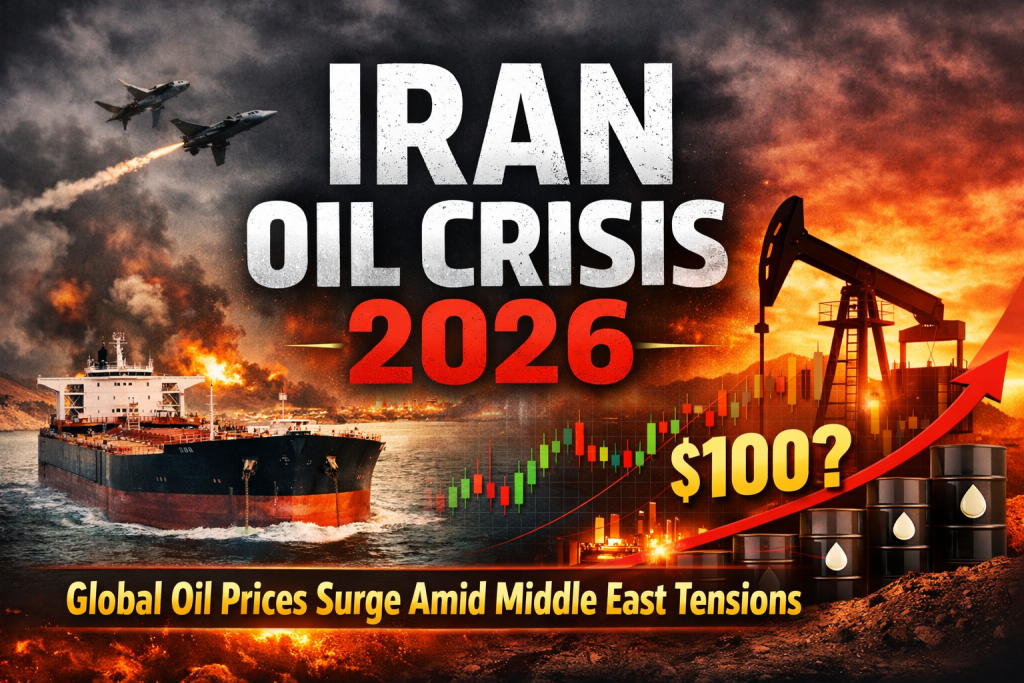
Iran Oil Crisis 2026: Why Global Oil Prices Are Surging Amid Middle East Tensions
Over the past few days, geopolitical tensions in the Middle East have sharply escalated, with military strikes involving the United States, Israel, and Iran that have sent shockwaves through global energy markets. This has not resulted in Iran formally banning its oil exports, but it has triggered fears of major supply disruptions and a significant rise in crude prices potentially to decades-high levels. What’s Happening in the Middle East Recent coordinated strikes by the US and Israel on Iranian targets have dramatically
intensified regional conflict. Iran has retaliated with missile and drone attacks across the Middle East, raising fears of a broader war. These actions have disrupted normal commercial activity, especially in critical shipping routes. One of the most important flashpoints is the Strait of Hormuz a narrow waterway between the Persian Gulf and the Gulf of Oman. Roughly 20% of the world’s crude oil supply moves through this strait each day. Reports indicate that many oil tankers and shipping companies have suspended operations there due to safety concerns, and
there are warnings that Iran may effectively halt traffic through the route.Global Oil Prices Surge Amid Supply Fears Brent crude prices jumped roughly 10% in a single session, reaching around $80 per barrel.Analysts warn that if the Strait of Hormuz remains closed or heavily restricted, oil could spike to $90–$100 per barrel or more, levels not seen since major crises of past decades. The price increases are driven not by a formal ban on Iranian exports, but by the risk premium attached to possible disruptions of oil flows across the region. Even the fear of a bottleneck in energy supply is
enough to push markets higher because global oil is traded worldwide and any potential disruption limits expected supply versus demand.OPEC+ Response and Supply Adjustment In response to rising market concerns, the OPEC+ oil-producing alliance which includes Saudi Arabia, Russia, and other major producers agreed on a gradual increase in oil output from April. Specifically, the group plans to add around 206,000 barrels per day to the global supply. However, many analysts say that this increased production may not be enough to fully offset potential losses if
Hormuz shipping routes remain disrupted. Therefore, markets remain on edge as traders factor in ongoing conflict risks.Impact on India, Asia, and Global Fuel Prices Countries heavily reliant on Middle Eastern oil including large importers like India are watching closely. Although India currently has enough stock to manage short-term needs, higher crude prices will likely translate into more expensive fuel and inflationary pressures down the line if the conflict drags on.In some regions, motorists are already bracing for local fuel price increases because wholesale crude prices and insurance
premiums for shipping are rising rapidly What This Means for the World No formal oil export ban: Iran hasn’t announced a complete ban on selling its oil.Risk of supply disruption: The real issue is that shipping routes and tanker operations are being severely affected, and that uncertainty is enough to push oil prices much higher. Market volatility: Commodity markets dislike uncertainty, so traders are pricing in risk, which also affects currencies, bond markets, and inflation expectations. Geopolitical ripple effects: A
prolonged conflict could reshape global energy flows, pushing countries to seek alternative sources and rethink their strategic fuel reserves The current spike in oil prices isn’t primarily because Iran has banned its crude exports rather, it’s because regional conflict has raised the risk of disrupted supply through vital sea lanes like the Strait of Hormuz. That uncertainty has sent global markets into a cautious, risk-off stance, leading to sharp price increases and broader concerns for consumers and economies worldwide.