







Ladakh, often called the Land of High Passes, is famous for its dramatic landscapes, crystal-clear skies, and surreal beauty. Among its many natural wonders, one sight that leaves travelers spellbound is the red sky of Ladakh. When the sky turns shades of red, orange, and crimson, Ladakh feels less like a destination on Earth and more like a scene from another planet.
What Is the Ladakh Red Sky The Ladakh red sky refers to the intense red and orange hues seen during sunrise and sunset in the region. Due to Ladakh’s high altitude, thin atmosphere, and extremely low pollution, sunlight scatters differently here, creating deeper and richer colors in the sky. At times, the sky appears so red that it gives Ladakh a Mars-like appearance, especially around places like Pangong Lake, Nubra Valley, and Leh.
Why Does the Sky Turn Red in Ladakh Several natural factors combine to create this stunning phenomenon High Altitude Ladakh lies at an average altitude of over 3,500 meters. The thinner atmosphere allows shorter wavelengths of light to scatter more easily, letting red and orange hues dominate. Clean and Dry Air With minimal pollution and very low humidity, the air in Ladakh is exceptionally clean. This clarity enhances the intensity of sunset and sunrise colors.
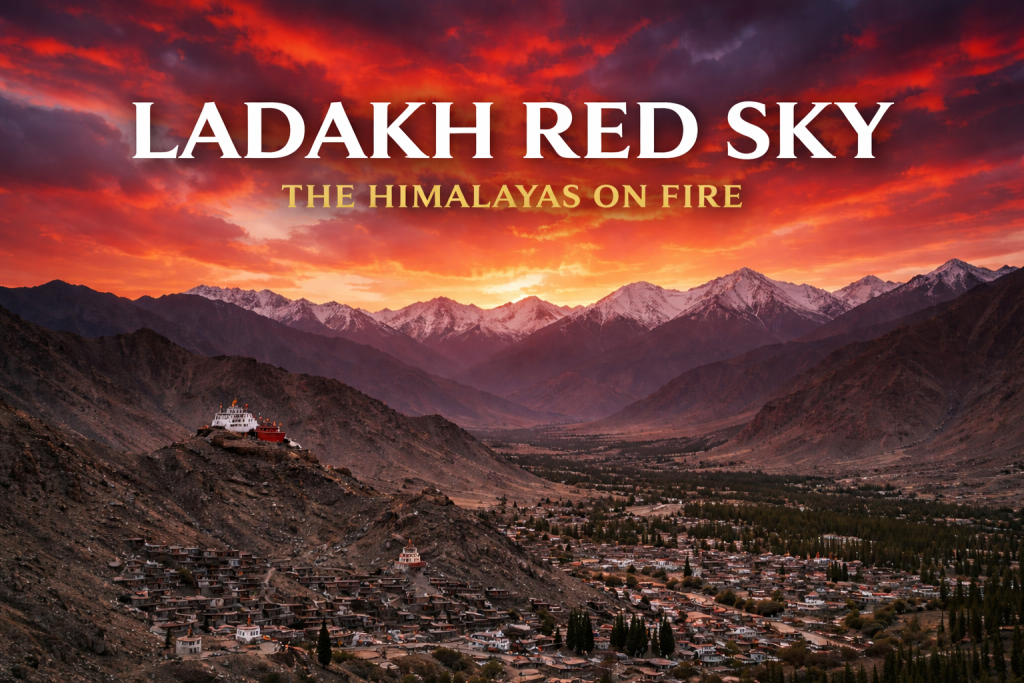
Angle of the Sun During early morning and late evening, sunlight travels a longer path through the atmosphere. Blue light scatters away, leaving behind warm red tones that paint the sky Dust and Ice Particles Fine dust and ice crystals suspended in the cold desert air further intensify red and pink shades, especially in winter and early summer.
Best Places to See the Red Sky in Ladakh If you want to witness the Ladakh red sky at its best, don’t miss these locations Pangong Lake – Red reflections on blue water are unforgettable Nubra Valley Surreal contrast of sand dunes and crimson skies Leh City Monasteries glowing under a red horizon Tso Moriri Lake Peaceful sunsets with dramatic colors Magnetic Hill Area – Wide open views of the changing sky
Best Time to Experience Ladakh Red Sky May to September: Clear skies and vibrant sunsets October to February: Deeper reds, especially during winter sunsets (very cold but magical) Early mornings around 5:00–6:00 AM and evenings after 6:30 PM are ideal Why the Red Sky of Ladakh Feels So Special Unlike cities where buildings block the horizon, Ladakh offers vast open landscapes. Mountains, lakes, and monasteries reflect the red sky, creating a cinematic effect that photographers and travelers dream of
DIGI MERCH STORE PRINT ON DEMAND

Many visitors describe the experience asPeaceful Spiritual Otherworldly Emotionally moving Photography Tips for Capturing Ladakh Red Sky Use a wide-angle lens to capture the full horizon Shoot in RAW mode for better color control Include mountains, lakes, or monasteries for depth Avoid over-editing—Ladakh’s colors are naturally intense The Ladakh red sky is not just a visual treat it’s an experience that stays with you long after you leave. Watching the Himalayas glow under a crimson sky reminds us of nature’s
Is the Red Sky in Ladakh a Sign of Weather Change In local belief, a red sky is sometimes associated with weather shifts, but scientifically it’s mainly due to light scattering. However, strong red skies can occasionally indicate wind or temperature changes, especially in winter. unmatched artistry. If Ladakh is on your travel list, make sure you pause, breathe, and witness this magical moment.
Ladakhtravelphotography YouTube
Comment