







In January 2026, health officials sounded an alert across West Bengal, India, after confirmation of several cases of the Nipah virus (NiV) a rare but potentially deadly zoonotic virus with a high fatality rate. This outbreak has triggered heightened surveillance, quarantine measures, and public health action across the region and neighboring states. The 2026 Nipah virus outbreak in West Bengal highlights how rare viruses can still cause serious localized health emergencies.
What Is the Nipah Virus?
The Nipah virus is a zoonotic virus meaning it can jump from animals to humans. Its natural reservoir is fruit bats (Pteropus species), but the virus can also spread through contact with other infected animals, contaminated food, or close contact with infected people. Unlike respiratory viruses like COVID-19, NiV is not considered highly contagious through casual air transmission, but it spreads via direct contact with bodily fluids (saliva, urine, blood) of infected animals or humans
How It Started in West Bengal
The latest outbreak was first identified in the North 24 Parganas district of West Bengal. Two nurses at a private hospital in Barasat were among the first suspected cases, both presenting with severe symptoms and requiring ventilator support early in the outbreak Subsequent testing confirmed additional cases including healthcare workers such as doctors and staff. In total, five infections have been reported in this cluster, prompting swift action from state and national health authorities
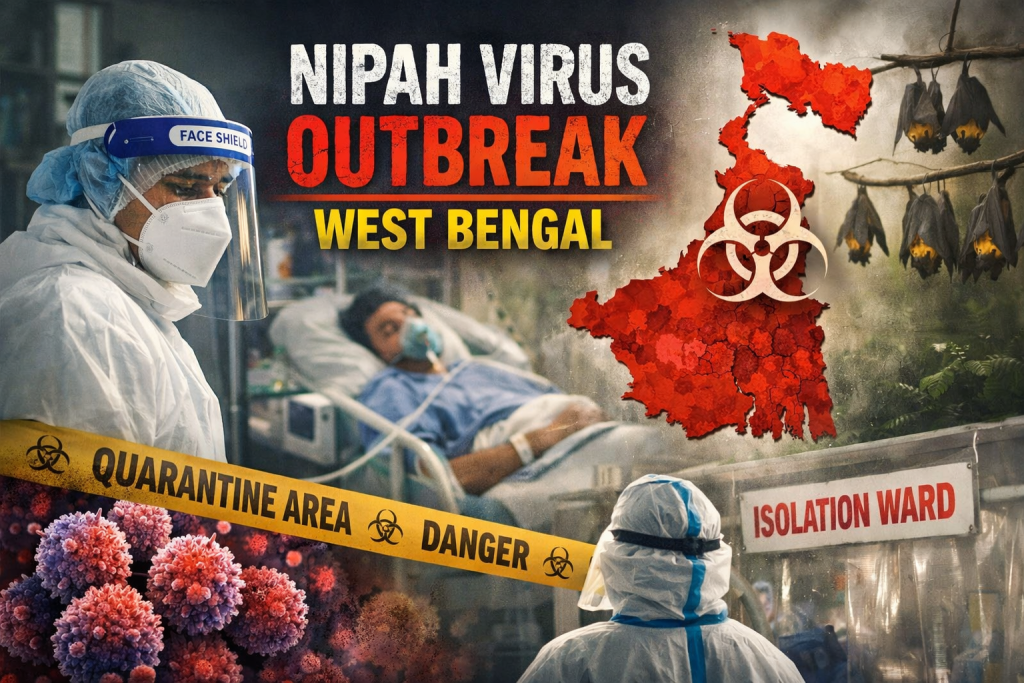
Health officials quarantined more than 100 close contacts and monitored nearly 200 samples to prevent further spread. A wedding in the Nadia district where raw date palm sap (a traditional winter drink known locally as khejurer rosh) was consumed is considered a possible initial point of exposure, as bats can contaminate sap with virus-laden saliva
Why Nipah Is Dangerous
Nipah virus infection can range from mild flu-like symptoms to severe respiratory illness and encephalitis (brain inflammation). Symptoms typically appear 4–14 days after exposure and may include Fever and headache Cough, sore throat, breathing difficulties Muscle pain Vomiting and diarrhea Neurological symptoms (confusion, seizures, coma) in severe cases Once severe illness develops, the fatality rate can be high, historically ranging from 40 % to 75 % or higher in some outbreaks.
No Vaccine or Specific Cure (Yet)
As of now, there is no approved vaccine or specific antiviral treatment for Nipah virus infection. Management focuses on early detection, supportive care, and strict infection control in healthcare settings to limit spread This makes containment through quarantine, contact tracing, and vigilant surveillance especially important A National Joint Outbreak Response Team with experts from ICMR, NIV Pune, AIIMS and other institutions was deployed to support containment and case management
DIGI MERCH STORE PRINT ON DEMAND

Public Health Response
The Public Health Emergency Operations Centre at Delhi’s National Centre for Disease Control was activated to coordinate efforts nationwide. Neighboring regions, including Tamil Nadu and Nepal, stepped up surveillance and screening, especially at health facilities and border checkpoints, to detect possible spread early. Environmental and wildlife teams began testing bat populations including those at Kolkata’s Alipore Zoo to understand potential animal reservoirs in urban areas
How Nipah Spreads
Animal-to-Human Direct contact with infected fruit bats or contact with their saliva, urine, or feces on fruits or sap. In some outbreaks, intermediate hosts (like pigs) have helped amplify transmission Human-to-Human Close contact with an infected person’s bodily fluids especially in caregiving or hospital settings can spread the virus Prevention Tips: What You Can Do Until vaccines or treatments become available, individual and community steps help reduce risk
Personal Precautions
Avoid consuming raw date palm sap or fruit that may have been contaminated by bats. .
Wash and peel all fruits before eating them Practice hand hygiene and respiratory etiquette (cover coughs, wash hands often Healthcare Measures Healthcare workers should use protective equipment (PPE) when caring for patients with suspected Nipah infection. Standard infection control protocols in hospitals aim to prevent spread among staff and visitors
NipahvirusIndia Instagramposts
Nipahvirusnews InfographicsPresentation
Nipahviruscauses DigitalMarketing
Nipahvirusquarantine Affiliatemarketing
NipahvirusBengalupdate MarketingMaterials
Comment