



The Delhi–Mumbai Expressway, India’s most ambitious greenfield expressway project, has emerged as a transformative infrastructure development for the country. Beyond reducing travel time between the national capital and the financial capital, the expressway has delivered significant distance and time benefits to the Mewat (Nuh) region of Haryana, a district that has long struggled with poor connectivity and limited economic oportunites
One of the biggest advantages of the Delhi–Mumbai Expressway for Mewat (Nuh) is the reduction in travel distance by approximately 35–40 kilometres, depending on the destination and entry point used. Travel relied on NH-248A, NH-48, and congested local roads Frequent traffic bottlenecks in towns and villages Longer travel times due to mixed traffic and road conditions Direct access to a controlled-access, high-speed expressway Smooth, signal-free travel Avoidance of city traffic and narrow rural roads
Delhi to Mumbai in Just 12–13 Hours The Delhi–Mumbai Expressway has reduced the overall distance between the two cities to about 1,350 kilometres, compared to nearly 1,450 kilometres earlier via NH-48. Maximum speed limit: 120 km/h for cars Travel time: 12–13 hours (non-stop travel) Lanes: 8 lanes (expandable to 12 in future) For residents and businesses in Mewat, this means faster access to Delhi, Jaipur, Gujarat, and Maharashtra, dramatically improving regional mobility.
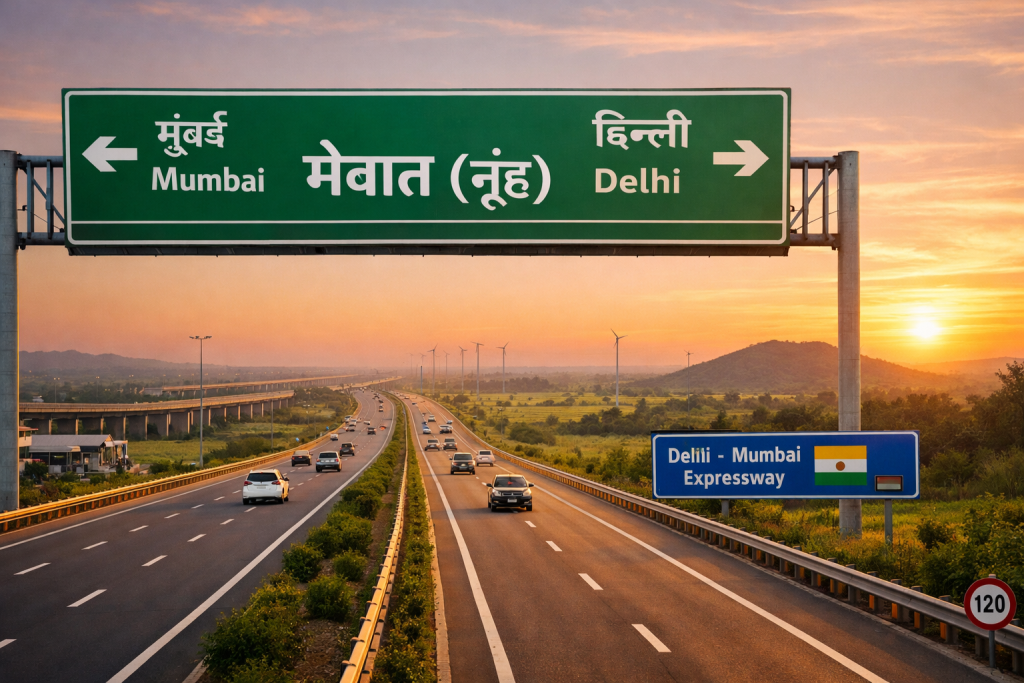
Why the Expressway Is a Game Changer for Mewat (Nuh) Improved Regional Connectivity The expressway directly connects Mewat to major economic and urban hubs Delhi-NCR Jaipur and western Rajasthan Gujarat’s industrial belts Mumbai and surrounding logistics zones Economic Growth and Investment Opportunities Infrastructure is the backbone of development, and the expressway has opened new doors for Mewat Logistics parks and warehouses Industrial clusters
Hospitality projects such as hotels, fuel stations, and rest areas Employment Generation The expressway is expected to create direct and indirect employment opportunities for local residents Construction and maintenance jobs Transport and logistics services Small businesses, dhabas, and service centers Reduced Traffic and Improved Road Safety Earlier, heavy vehicles passing through villages posed serious safety risks. With the expressway Long-distance freight traffic shifts
Reduced congestion inside towns Improved safety for pedestrians and local commuters Better Access to Education and Healthcare Easier access to advanced hospitals Better opportunities for students traveling to universities and coaching centers Quicker emergency medical transportation Key Entry and Exit Points Near Mewat Residents of Mewat (Nuh) can access the Delhi–Mumbai Expressway through Nuh–Firozpur Jhirka belt
DIGI MERCH STORE PRINT ON DEMAND

Sohna side connectivity Alwar side links via Rajasthan These access points integrate Mewat seamlessly into the national expressway network Environment-Friendly and Future-Ready Infrastructure The Delhi–Mumbai Expressway is designed with sustainability in mind Greenfield alignment to reduce urban congestion Dedicated emergency lanes Modern traffic monitoring systems Animal underpasses and eco-sensitive planning Such features ensure long-term benefits while minimizing environmental impact
A New Future for Mewat Experts believe that over the next 5 to 10 years, Mewat could evolve into a key transit and logistics hub due to its strategic location on the Delhi–Mumbai corridor. Improved infrastructure often acts as a catalyst for social and economic transformation, and this expressway is poised to play that role for the region.
The Delhi–Mumbai Expressway is not just a road—it is a lifeline for development. For Mewat (Nuh), the expressway has delivered a meaningful distance cut, substantial time savings, and unprecedented connectivity to India’s economic centers. As infrastructure-driven growth takes shape, the region stands at the threshold of a new era marked by opportunity, mobility, and progress.
DelhiMumbaiExpressway productcatlog
NuhHaryanadevelopment WearableTech
greenfieldexpresswayIndia Twitterposts
Mewattraveltimereduction SmartHome
Mewatinfrastructuregrowth TechTips
Comment