







On the evening of 18 January 2026, Spain witnessed one of the most devastating rail disasters in its modern history. Two high-speed trains collided near the small town of Adamuz, in Córdoba province in southern Spain, resulting in a tragic loss of life and leaving hundreds injured in what officials have described as an extremely strange and heartbreaking accident
At around 7:39–7:45 p.m. local time, an Iryo high-speed train traveling from Málaga to Madrid suddenly derailed on a straight section of track near Adamuz—an area roughly 360 km south of Madrid. The derailed train crossed onto the lane of an oncoming service run by Spain’s state operator, Renfe, which was headed from Madrid to Huelva. The two trains then collided head-on at high speed, causing both to derail. The Renfe train sustained especially severe damage: its first two carriages were knocked off the rails and plunged down an embankment of about four meters, complicating rescue efforts further
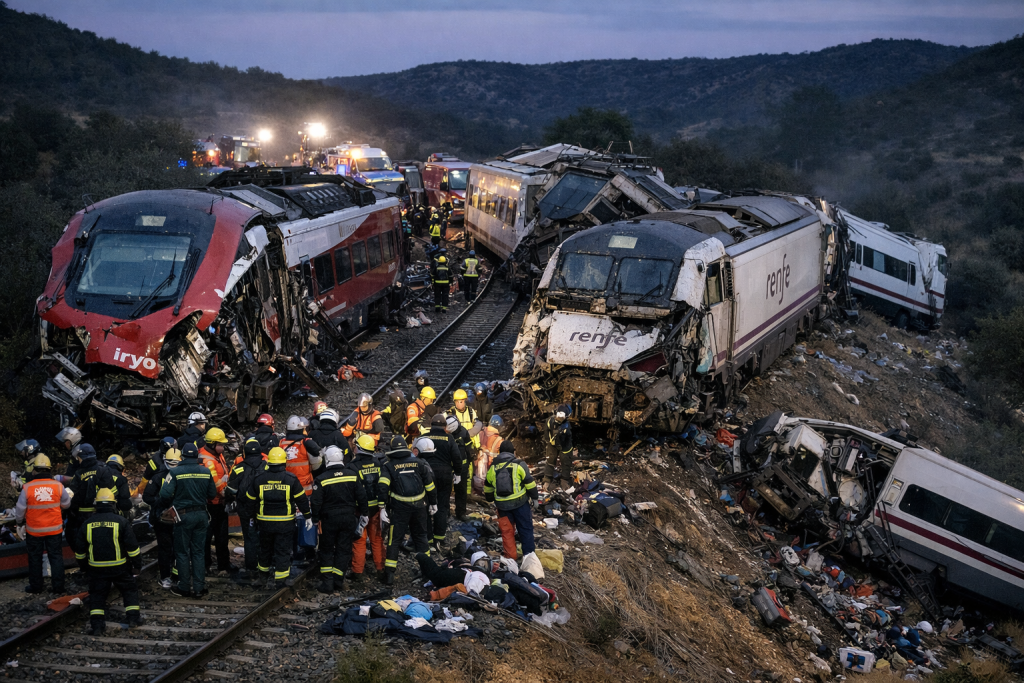
Casualties and Injuries At least 39 people have died, with authorities warning the number could rise as recovery continues Dozens more were injured, with reports indicating around 150 + wounded, including many in serious or critical condition Survivors and emergency responders described scenes of chaos, with some passengers trapped in mangled carriages and others thrown from seats during the impact. Most of the fatalities occurred in the first carriages of the Renfe train—where the crash impact was fiercest
Emergency services responded swiftly, though challenging terrain and wreckage slowed operations. Firefighters, the Red Cross, local medical teams and civil authorities worked throughout the night to extract victims, treat the injured and recover bodies Temporary triage stations were set up near the crash site, and ambulances transported victims to hospitals throughout the region. The Civil Guard and rail infrastructure body ADIF coordinated the recovery and safety operations, while rail services between Madrid and Andalusia were immediately suspended
Spanish authorities expressed profound sorrow and solidarity. Prime Minister Pedro Sánchez called the tragedy a “night of deep pain” for the nation and pledged full government support to families affected by the crash Transport Minister Óscar Puente acknowledged the very unusual nature of the accident especially given that the derailment happened on a straight, recently renovated track and involved a relatively new Iryo train Regional leaders and the Spanish royal family also conveyed condolences, while neighbouring European countries offered support in the aftermath
DIGI MERCH STORE PRINT ON DEMAND

Spain’s high-speed rail network is highly regarded worldwide for safety and efficiency, boasting thousands of kilometres of dedicated track linking major cities like Madrid, Barcelona, Seville and Malaga. Yet this collision taking place on a straight, modern section of line raises serious questions about how such a catastrophic derailment could occur under conditions that, on the surface, seemed safe and routine. Investigators are now examining everything from mechanical functions and track integrity to signaling systems and maintenance records
As rescue operations wind down and investigators dig deeper, Spain faces both mourning and introspection. For passengers and families, the focus remains on healing and recovery. For the rail industry, the collision underscores the importance of understanding even the rarest failures to prevent future tragedies If you’d like, I can also provide maps, survivor stories, or a timeline of how events unfolded during the hours around the accident.
Spaintraincrash. dailyprompt-2116
Spaintraincollision. dailyprompt-2110
Renfetrainaccident. Affiliatemarketing
Iryotrainderailment. Businesscards
Europeantrainaccident. dailyprompt
Comment