
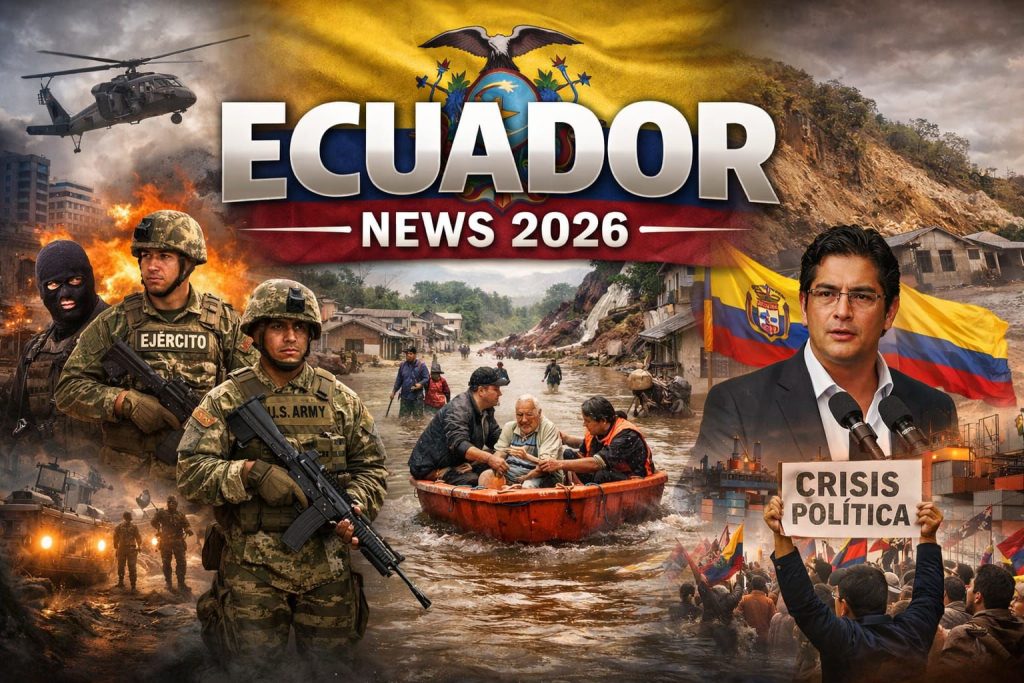
Ecuador News 2026: Security Crackdown, Flood Emergency & Political Tensions Shape the Nation
Ecuador is facing a defining moment in 2026. From intensified anti-drug operations with the United States to severe flooding across multiple provinces, the country is navigating one of its most challenging periods in recent history. At the center of the political landscape stands President Daniel Noboa, whose security-first strategy is reshaping national policy and sparking debate both domestically and internationally. Ecuador’s Escalating War on Drug Cartels Ecuador has become a critical transit route for cocaine shipments moving from Colombia
and Peru toward North America and Europe. Over the past two years, powerful criminal organizations have tightened their grip on ports, prisons, and key cities. Joint Military Operations with the United States In 2026, Ecuador formally expanded joint anti-drug operations with the United States. The collaboration includes: Intelligence sharing Maritime patrol support Surveillance technology deployment Targeted action against designated criminal groups The Noboa administration argues that foreign cooperation is necessary to dismantle organized crime networks that have fueled record homicide rates.
However, critics question: The long-term implications for national sovereignty Potential civilian risks Whether militarization alone can solve structural issues like poverty and corruption Rising Violence in Interior Cities While coastal cities such as Guayaquil have long struggled with cartel activity, violence has increasingly shifted inland. Cities like: Babahoyo Quevedo have seen growing homicide rates and organized crime infiltration. Security analysts point to: Prison gang expansions Smuggling route diversification Fragmentation of criminal organizations This shift has turned once-quiet urban centers into new security hotspots.
Heavy Rains and National Emergency Impact of the Rainy Season Over 20,000 residents affected Multiple provinces under emergency status Infrastructure damage including roads and bridges Agricultural losses in rural communities The government has deployed emergency response teams, but recovery remains slow in remote areas. Political Tensions and Constitutional Reform President Daniel Noboa has pushed for structural reforms aimed at strengthening executive authority in combating crime. Proposed changes include: Expanded military policing powers Judicial reforms
Tighter security regulations Supporters say these measures are necessary to restore order.
Opponents argue they risk weakening democratic checks and balances. Border Security and Regional Cooperation Ecuador’s northern border with Colombia remains a key security challenge. Armed groups and dissident factions operate across porous border zones. Church leaders and civil society groups have initiated peace and anti-violence programs in coordination with Colombian counterparts, highlighting the importance of community-level solutions alongside military strategy.
Economic Outlook Foreign investment Infrastructure modernization Energy and oil sector development What’s Next for Ecuador Security enforcement Human rights protections Economic recovery Climate resilience Whether President Noboa’s hardline approach will stabilize the country or deepen divisions remains one of the most closely watched political questions in Latin America today. Ecuador’s current situation reflects a complex intersection of organized crime, political reform, and environmental crisis. With international cooperation expanding and domestic debates intensifying, 2026 could prove to be a turning point for the nation’s future.