
Daylight Saving Time 2026: Dates, Meaning, and Global Impact
Daylight Saving Time (DST) is the practice of moving clocks forward during warmer months so that evenings have more daylight and mornings have less. Millions of people across North America and Europe adjust their clocks every year as part of this seasonal time change. In 2026, Daylight Saving Time will once again affect several countries, changing daily schedules, travel plans, and international business timings. This article explains the Daylight Saving Time 2026 schedule, how it works, and which countries follow it.
What Is Daylight Saving Time Daylight Saving Time is a system where clocks are set forward by one hour in spring and set back by one hour in autumn. The idea is to make better use of natural daylight and reduce energy consumption. The concept was first widely implemented during the 20th century and continues to be used in many countries today. While supporters say it saves energy and provides longer evening daylight, critics argue that it can disrupt sleep patterns and daily routines.
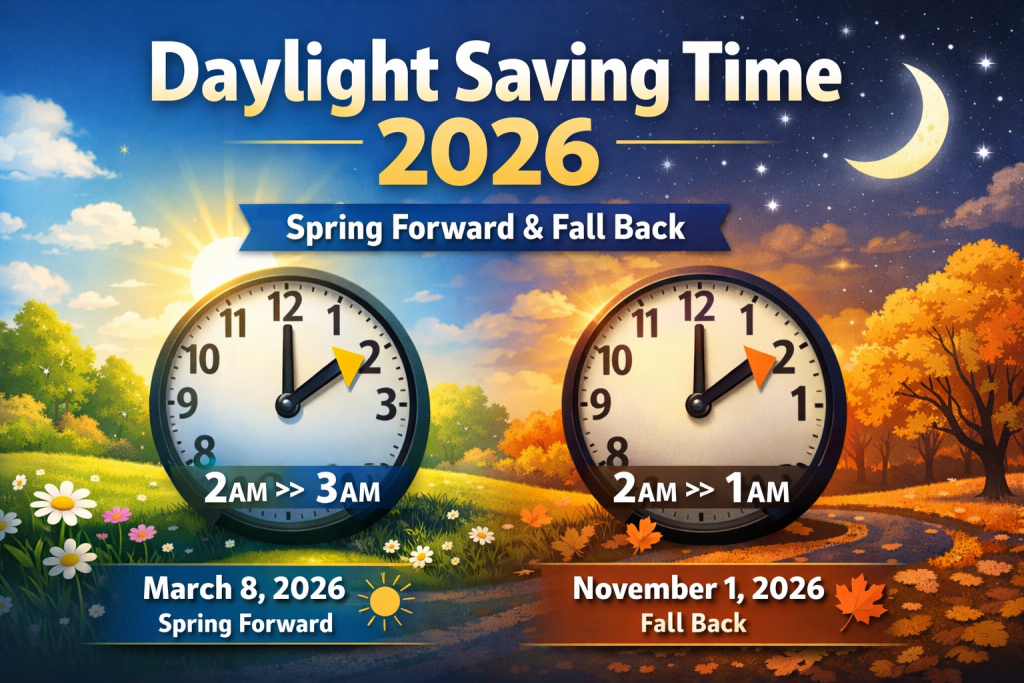
Daylight Saving Time 2026 Schedule United States and Canada DST Begins: Sunday, March 8, 2026 Clocks move forward one hour at 2:00 AM (becoming 3:00 AM) DST Ends: Sunday, November 1, 2026 Clocks move back one hour at 2:00 AM (returning to 1:00 AM) This change is commonly remembered as: Spring Forward in March Fall Back” in November Europe European countries follow a slightly different schedule. DST Begins: Sunday, March 29, 2026 DST Ends: Sunday, October 25, 2026 In Europe, this system is also called Summer Time.
Countries That Use Daylight Saving Time Many countries still follow DST, including: United States Canada United Kingdom Germany France Italy and Spain Australia (some regions) New Zealand However, several nations have decided not to use DST due to minimal benefits in their regions. Countries That Do Not Use DST Some countries keep the same time throughout the year, including: India China Japan Singapore United Arab Emirates India follows Indian Standard Time (IST) year-round and does not adjust clocks seasonally.
Why Daylight Saving Time Exists The main purpose of Daylight Saving Time is to maximize daylight hours during evenings. Originally, the system was introduced to reduce energy consumption by lowering the need for artificial lighting. Key reasons for DST include: Better use of daylight Reduced electricity usage Longer evening daylight for outdoor activities Potential economic benefits for retail and tourism Despite these benefits, modern studies show mixed results regarding energy savings.
How Daylight Saving Time Affects Daily Life Sleep and Health Losing one hour of sleep in spring can temporarily disrupt sleep schedules and cause fatigue. Business and International Meetings Companies that work with international clients must adjust meeting times when DST begins or ends. Travel and Flights Airlines update schedules automatically, but travelers should always double-check departure times around the time change. Technology Most smartphones, computers, and smart devices adjust automatically to Daylight Saving Time.
The Debate Around DST In recent years, there has been ongoing debate about whether Daylight Saving Time should continue. Some governments and organizations believe the system is outdated and causes unnecessary disruption. Several regions have discussed switching to permanent standard time or permanent daylight time, but no global consensus has been reached yet.