
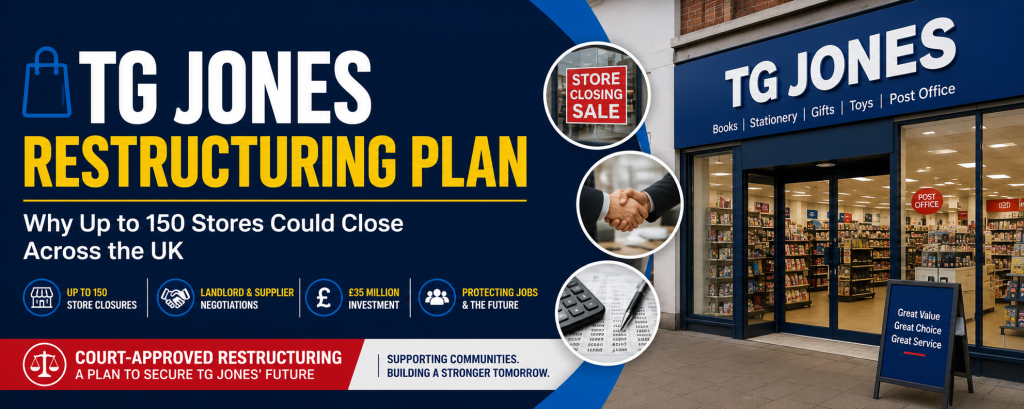
Former WH Smith Chain TG Jones Unveils Rescue Plan Amid Financial Crisis
TG Jones is restructuring, how many stores could close, what it means for employees, suppliers, and shoppers, and the latest developments in the retailer’s rescue plan.
The future of TG Jones, the retailer that replaced the historic WH Smith high street business, hangs in the balance as the company pushes forward with a major restructuring plan designed to avoid insolvency. The proposal could reshape one of Britain’s best-known retail networks, leading to the closure of up to 150 stores while significantly changing relationships with landlords, suppliers, and creditors.
The restructuring represents one of the most significant retail rescue efforts in the UK this year and reflects the growing challenges facing traditional high street businesses in an increasingly digital economy.
Why Is TG Jones Restructuring?
TG Jones was created after investment firm Modella Capital acquired the former WH Smith high street business in 2025. While the WH Smith brand continues to operate at airports, railway stations, and travel locations, the traditional high street stores were rebranded under the new TG Jones name.
Despite hopes that new ownership would revive the chain, the retailer has continued to struggle with several long-term challenges, including: Declining foot traffic across UK high streets Rising operating costs Inflation-driven pressure on consumers Increased online competition Higher rent and property expenses Weaker discretionary spending Company executives argue that without major restructuring, the retailer could run out of financial options and potentially enter administration.
Up to 150 Stores Could Close
Perhaps the most significant part of the restructuring proposal is the planned closure of as many as 150 stores. The company currently operates approximately 450 high street locations across the United Kingdom. Management believes reducing the estate will allow the remaining stores to become financially sustainable. According to restructuring documents, only the most profitable and strategically important stores are expected to remain open over the long term.
What Happens to Employees?
Thousands of employees could be affected if stores close. Although TG Jones has not confirmed the exact number of job losses, retail analysts believe the restructuring could impact several thousand workers if the maximum number of closures takes place. The company says preserving the majority of jobs depends on successfully restructuring now rather than entering administration later.
Landlords Asked to Accept Lower Rent
One of the most controversial parts of the proposal involves commercial landlords. Temporary rent reductions Revised lease agreements More flexible payment structures Long-term rental adjustments
Initially, several major landlords opposed the proposal, arguing that the burden fell too heavily on property owners. However, after negotiations and revised terms, key landlord groups have reportedly agreed to support the restructuring, significantly improving the company’s chances of survival.
Suppliers Face Financial Losses
Some smaller suppliers may recover only part of the money owed.
Certain suppliers that are no longer considered strategic partners could lose outstanding payments altogether.
Larger continuing suppliers may receive delayed repayments instead of immediate settlement.
These measures have generated criticism from businesses that rely heavily on the retailer as a customer.
Financial Support from Modella Capital
To support the turnaround, owner Modella Capital has pledged substantial new funding. Approximately £35 million in additional financing Operational improvements Store refurbishment Lower pricing strategies Simplified product ranges Expansion of successful retail partnerships Management believes these investments will strengthen the company’s long-term competitiveness if the restructuring receives final approval.
New Retail Strategy
Beyond reducing costs, TG Jones plans to modernize its business model. Better value pricing Improved product selection Modernized store layouts Expansion of concession partnerships Continued collaboration with services such as Post Office locations and toy departments Greater focus on profitable product categories Executives believe these changes will help the retailer better compete with online retailers while maintaining its presence on Britain’s high streets.
Court Approval Remains Essential
Although several creditor groups have voted in favor of the restructuring, the process still requires approval through the UK’s legal restructuring framework.
Company executives have warned that failure to secure final approval could leave administration as the only remaining option.
Recent court proceedings have highlighted the urgency of the situation, with the retailer stating that delays could make it increasingly difficult to meet financial obligations.
What This Means for the UK High Street
The TG Jones restructuring reflects broader pressures affecting traditional retailers throughout Britain. Changing consumer shopping habits Growth in online retail Rising wage costs Increased business rates Inflation Lower town-centre footfall
Industry experts believe retailers with large physical store networks must increasingly balance maintaining local presence with achieving financial sustainability.
Latest Developments
Recent progress suggests the restructuring has gained momentum after important landlord groups backed revised proposals.
This support significantly improves TG Jones’ prospects, although negotiations with some creditors remain ongoing. The final decision from the court will determine whether the retailer proceeds with its recovery strategy or faces the risk of insolvency.
The TG Jones restructuring plan marks a defining moment for one of Britain’s largest high street retail businesses. By combining store closures, financial restructuring, fresh investment, and operational reforms, the company hopes to secure a sustainable future after its transition from the WH Smith high street brand.