
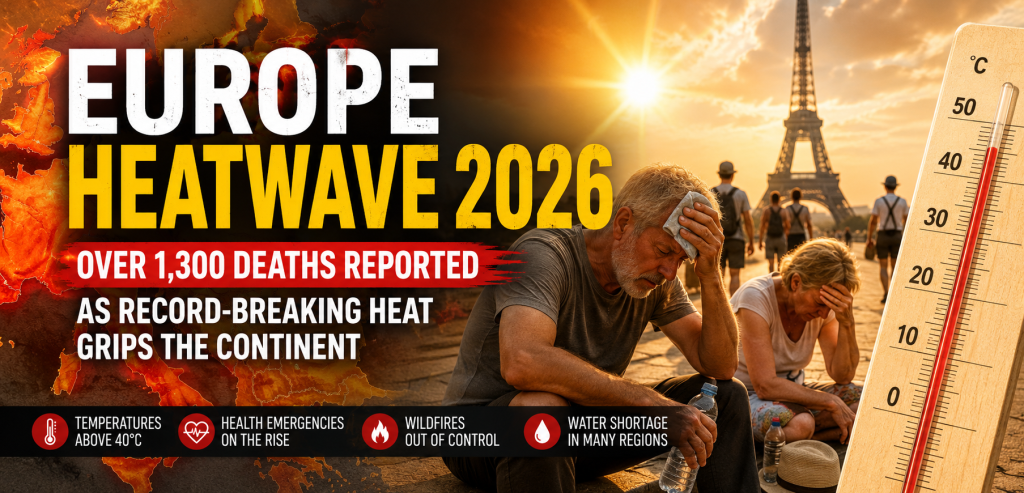
Deadly Europe Heatwave 2026: Extreme Temperatures Claim More Than 1,300 Lives
Europe’s deadly 2026 heatwave has claimed more than 1,300 lives as temperatures exceed 40°C across multiple countries. Read the latest updates, causes, government response, and climate impact.
Europe is battling one of the most severe early-summer heatwaves in recent history, with health officials reporting that more than 1,300 excess deaths have been linked to extreme temperatures since June 21. The unprecedented heat has pushed thermometers above 40°C (104°F) across several countries, overwhelming hospitals, disrupting transportation, fueling wildfires, and forcing governments to implement emergency measures.
Meteorologists describe the event as an extraordinary weather pattern driven by a persistent high-pressure system, commonly referred to as a heat dome, which has trapped scorching air over much of the continent for days.
Countries Hit Hardest by the Heatwave
Several European nations have experienced record-breaking temperatures, including: France Spain Italy Germany Portugal Greece Croatia Romania Hungary Poland Authorities have issued red heat alerts in numerous regions as daytime temperatures climbed beyond seasonal norms, with many cities recording their hottest June temperatures on record.
France Reports the Highest Number of Excess Deaths
France has emerged as one of the worst-affected countries during the current heatwave. Health authorities estimate that approximately 1,000 excess deaths have occurred as a result of prolonged extreme temperatures. Elderly citizens, people with chronic illnesses, and socially isolated individuals have been identified as the most vulnerable groups.
Emergency services have reported: A surge in heatstroke cases Increased ambulance dispatches Hospitals operating under pressure Cooling centers opened in major cities The government has urged residents to avoid unnecessary outdoor activities during peak afternoon hours.
Infrastructure Under Severe Pressure
The intense heat has affected more than public health. Railway tracks expanding and bending under extreme temperatures Roads softening and requiring emergency repairs Delays in train and public transport services Increased electricity demand due to cooling systems Pressure on national power grids Several regions have also experienced water shortages, prompting local governments to encourage water conservation.
Wildfires Spread Across Southern Europe
Hot, dry conditions have significantly increased wildfire risks across southern Europe. Firefighters have responded to multiple forest fires in countries including: Italy Croatia Greece Spain
Strong winds and extremely dry vegetation have complicated firefighting efforts, while some communities have been placed on evacuation alert. Environmental experts warn that prolonged heat combined with drought creates ideal conditions for large-scale wildfires.
Why Is This Heatwave So Dangerous?
Unlike sudden storms or floods, heatwaves often become “silent killers.” Heat exhaustion Heatstroke Dehydration Heart attacks Respiratory complications Kidney problems
Older adults, infants, outdoor workers, pregnant women, and people with cardiovascular diseases remain at the highest risk. Health experts advise staying hydrated, avoiding strenuous activities during midday, and checking regularly on elderly relatives and neighbors.
Scientists Link the Event to Climate Change
Climate scientists say the severity and intensity of this year’s heatwave have been amplified by human-induced climate change.
According to rapid attribution studies, weather conditions of this magnitude have become significantly more likely because of rising global temperatures caused by greenhouse gas emissions. Researchers also warn that similar extreme heat events are expected to become more frequent and longer-lasting in coming decades.
The World Meteorological Organization has described the event as one of the most significant heat episodes affecting Europe in recent years.
Governments Introduce Emergency Measures
European governments have responded with a range of emergency actions, including: Opening public cooling shelters Extending hospital emergency capacity Issuing nationwide heat warnings Adjusting school schedules Distributing drinking water Increasing public health messaging Authorities continue to encourage residents to remain indoors during the hottest parts of the day and monitor weather updates closely.
Meteorologists expect the worst of the heat to gradually shift toward Central and Eastern Europe over the coming days. Although temperatures may ease in parts of Western Europe, dangerous heat is forecast to continue affecting millions of people across the continent. Some regions could still experience temperatures exceeding 40°C, while isolated thunderstorms may bring temporary relief but also increase the risk of flash flooding.
Global Climate Warning
The latest European heatwave serves as another reminder of the growing impact of climate change on public health and infrastructure.
Scientists emphasize that improving urban planning, expanding cooling infrastructure, strengthening healthcare preparedness, and reducing greenhouse gas emissions will be essential to protecting communities from future extreme weather events.
As Europe continues to endure dangerous temperatures, officials warn that public awareness and early intervention remain the most effective tools for preventing additional heat-related deaths.