Why Anna Paulina Luna’s House Blockade Is Making Headlines Across America
why Anna Paulina Luna’s House blockade has sparked a major congressional standoff over the SAVE America Act, delaying legislation and creating new challenges for Republican leaders in 2026.
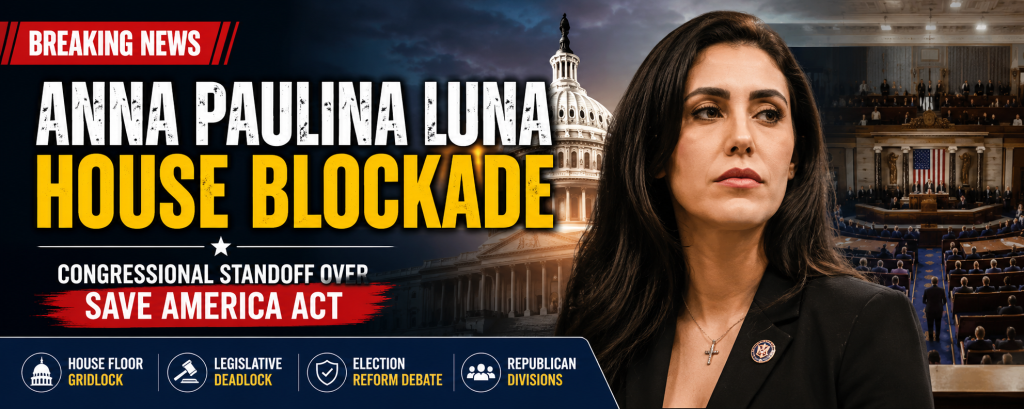
A political confrontation inside the U.S. House of Representatives has drawn national attention after Representative Anna Paulina Luna and a group of conservative lawmakers moved to block House floor activity in an effort to pressure the Senate into advancing the SAVE America Act. The dispute has become one of the most significant internal Republican clashes of 2026, highlighting divisions within the party over election policy, legislative priorities, and the balance of power between the House and Senate.
The controversy centers on the SAVE America Act, a Republican-backed election reform proposal that supporters describe as a measure designed to strengthen voter verification requirements and election security. Luna and several conservative allies argued that Senate Republicans were not moving quickly enough on the legislation. In response, they threatened to oppose procedural votes necessary for advancing House business, effectively slowing or halting consideration of other bills. Reports indicate that planned votes were delayed and House leadership was forced to reassess its legislative schedule.
The strategy relies on the narrow Republican majority in the House. With only a small margin for error, a handful of dissenting lawmakers can significantly disrupt leadership’s ability to move legislation forward. The blockade placed substantial pressure on House Speaker Mike Johnson, who has been attempting to maintain party unity while advancing key Republican priorities.
As tensions escalated, Johnson met with President Donald Trump to discuss possible solutions and restore normal House operations. Following the meeting, Johnson signaled that congressional business would continue and emphasized the need to prevent further disruptions. The standoff demonstrated the challenges facing House leadership when a small faction of lawmakers is willing to use procedural tools to force action on a specific issue.
Supporters of the legislation argue that stronger voter identification standards and citizenship verification measures are necessary to maintain confidence in federal elections. They believe the bill addresses concerns about election integrity and voter eligibility.
Critics, however, contend that the proposal could create barriers for eligible voters and address a problem that they argue is already extremely rare. Democratic lawmakers have strongly opposed the measure, making its path through Congress particularly difficult. Because Senate rules generally require broader bipartisan support for major legislation, many Republican senators have expressed doubts about whether the bill can secure enough votes to advance.
The House blockade revealed broader frustrations among some conservative lawmakers who believe election-related legislation should receive greater attention before the 2026 midterm elections.
Several members publicly supported Luna’s position, arguing that Republican voters expect stronger action on election reform. Others within the party worried that freezing House business could delay funding bills, veterans’ legislation, and other priorities that lawmakers were hoping to complete before upcoming congressional deadlines. This disagreement has created a debate within Republican ranks over the most effective strategy for advancing conservative policy goals.
President Trump has repeatedly emphasized the importance of election-related reforms and has described the SAVE America Act as a major legislative priority. At the same time, reports indicate that Trump later encouraged House Republicans to avoid prolonged legislative gridlock and focus on maintaining party unity. His intervention illustrated the delicate balance between supporting policy objectives and ensuring that Congress remains functional.
Political analysts note that Trump’s influence remains a decisive factor in Republican Party politics, particularly when disagreements emerge between different factions of the party. The timing of the dispute is significant because it comes just months before critical midterm elections. Both Republicans and Democrats are closely watching how the standoff affects public perception of Congress and each party’s ability to govern.
Supporters of the blockade argue that voters want lawmakers to prioritize election security. Opponents warn that prolonged legislative paralysis could overshadow other policy achievements and create political risks heading into the campaign season. The outcome may influence not only the future of the SAVE America Act but also broader Republican messaging on election reform and government accountability.
The immediate future of the House blockade depends largely on negotiations between House leadership, Senate Republicans, and conservative lawmakers pushing for action on the SAVE America Act. While Speaker Johnson has expressed confidence that legislative work will continue, Luna and her allies have indicated they remain committed to their position unless they see meaningful progress.
As Congress approaches important funding deadlines and legislative deadlines, pressure is mounting on all sides to find a compromise that allows lawmakers to move forward while addressing concerns surrounding election reform. The Anna Paulina Luna House blockade has become one of the most closely watched political confrontations in Washington during 2026. What began as a fight over election legislation has evolved into a broader debate about congressional procedure, party unity, and legislative strategy.