
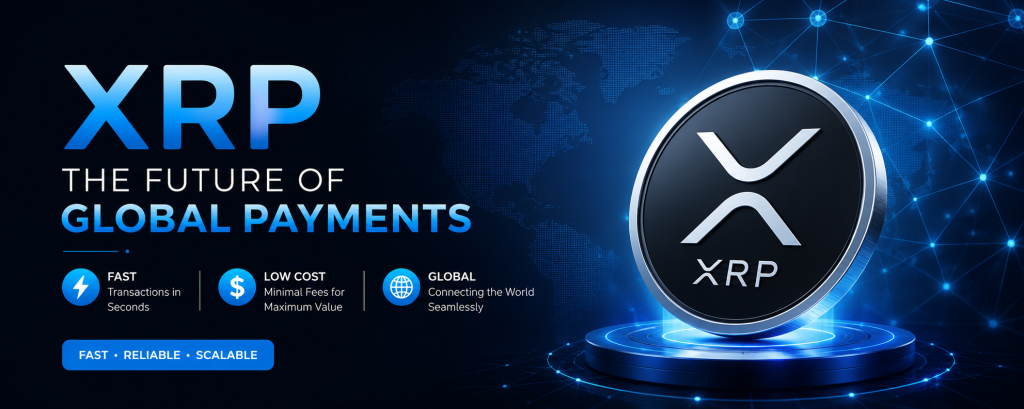
XRP in 2026: The Future of Fast and Affordable Global Payments
The cryptocurrency market remains one of the most dynamic sectors in global finance, and XRP continues to stand out as one of the industry’s most recognized digital assets. Designed to facilitate fast, low-cost international transactions, XRP has attracted attention from investors, financial institutions, and blockchain enthusiasts alike. As the digital asset ecosystem evolves in 2026, XRP’s role in cross-border payments and financial innovation remains a major topic of discussion.
XRP is a digital currency that operates on the XRP Ledger, a decentralized blockchain network created to process transactions quickly and efficiently. Unlike many cryptocurrencies that rely on mining, XRP uses a unique consensus mechanism that validates transactions in seconds while consuming significantly less energy.
The primary goal of XRP is to improve the speed and affordability of international money transfers. Traditional cross-border payments often involve multiple intermediaries, resulting in delays and higher costs. XRP aims to streamline this process by providing near-instant settlement capabilities.
Over the years, financial institutions have explored blockchain technology as a way to modernize payment infrastructure. XRP has frequently been highlighted because of its focus on real-world financial applications rather than solely serving as a speculative asset. Banks, payment providers, and fintech companies continue to evaluate blockchain-based solutions to improve transaction efficiency. As demand for faster international transfers grows, technologies built around the XRP Ledger remain part of the broader conversation about the future of global payments.
Like most cryptocurrencies, XRP experiences price fluctuations influenced by market sentiment, regulatory developments, and overall economic conditions. Investors closely monitor news surrounding digital asset adoption, technological upgrades, and institutional involvement. The cryptocurrency market has matured considerably in recent years, attracting both retail and professional investors. XRP’s established presence and strong community support have helped maintain its relevance despite market volatility.
One of XRP’s key strengths is transaction speed. Payments on the XRP Ledger can typically settle within a few seconds, making it one of the fastest blockchain networks in operation. Low transaction costs High scalability Energy-efficient consensus mechanism Support for global payment applications Continuous network development Developers continue to explore new use cases for the XRP Ledger, including tokenization, decentralized finance applications, and digital asset management solutions.
Regulation remains one of the most important factors shaping the future of cryptocurrency markets. Governments and regulatory agencies worldwide are working to establish clearer frameworks for digital assets. Greater regulatory clarity can help improve investor confidence while encouraging broader adoption of blockchain technologies. Market participants continue to monitor developments that may impact XRP and the wider cryptocurrency industry.