
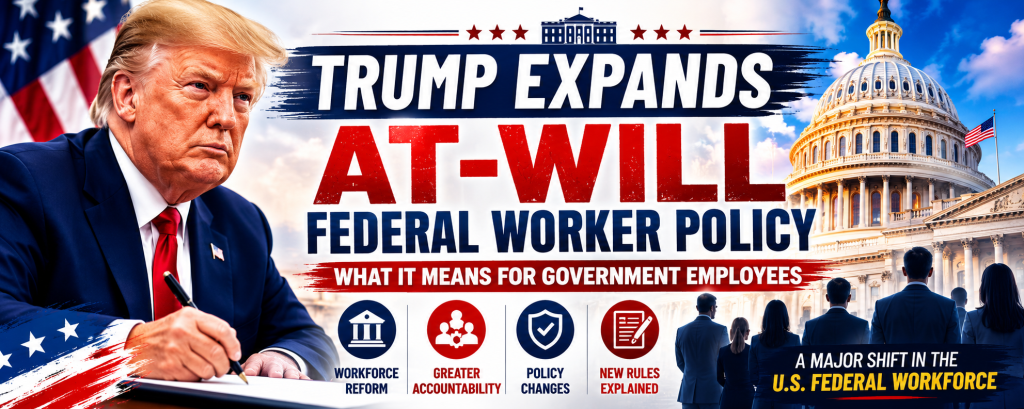
Trump Expands At-Will Employment for Federal Workers Amid Growing Debate
The Trump administration has taken a significant step toward reshaping the federal workforce by expanding a policy that allows certain government employees to be classified as at-will workers. The move has reignited a national debate over government accountability, civil service protections, and the future of the federal workforce.
The policy, which evolved from the earlier Schedule F initiative introduced during President Donald Trump’s first term, aims to reclassify thousands of federal employees whose positions involve policy development, implementation, or advisory responsibilities. Under the new framework, these workers could lose traditional civil service protections and become easier to dismiss.
What the Policy Means
At-will employment generally allows employers to terminate employees without lengthy administrative procedures, provided the dismissal does not violate existing laws. In the federal government, most career civil servants are protected by regulations that require agencies to demonstrate cause before termination.
Supporters of the administration’s policy argue that government leaders need greater flexibility to ensure federal agencies effectively implement the priorities of elected officials. They contend that removing underperforming employees is often difficult under the current system and that greater accountability is necessary to improve government efficiency.
Administration officials have stated that the changes are focused primarily on employees involved in shaping or influencing policy decisions rather than rank-and-file government workers.
Supporters Cite Accountability and Efficiency
Advocates of the reform say federal agencies should operate with the same level of accountability expected in other sectors. They argue that senior policy employees wield significant influence over government decisions and therefore should be more directly accountable to elected leadership.
Supporters also believe the measure could help streamline decision-making processes and reduce bureaucratic obstacles that sometimes slow the implementation of administration priorities. Many conservatives view the initiative as a long-overdue modernization of the federal workforce, claiming it will create a more responsive and efficient government.
Critics Warn of Politicization
Opponents of the policy have expressed concerns that reducing civil service protections could undermine the independence of federal employees. Labor unions, government watchdog groups, and some legal experts argue that career professionals should be protected from political pressure.
Critics warn that employees could feel compelled to align with political leadership rather than provide objective expertise. They also fear that future administrations could use the policy to replace experienced career staff with politically loyal appointees. Several employee organizations have indicated they may challenge aspects of the policy through legal and administrative channels.
Potential Impact on Federal Agencies
The policy could affect employees across numerous federal departments and agencies, particularly those involved in policy analysis, regulatory development, and executive decision-making support.
Experts say the long-term impact will depend on how agencies implement the new classification system and how courts respond to potential legal challenges. Some analysts predict the changes could lead to broader reforms of federal employment practices in the coming years.The debate reflects a larger national conversation about the balance between government efficiency and the preservation of a professional, nonpartisan civil service.
As implementation moves forward, lawmakers, labor groups, policy experts, and federal employees will continue to monitor the effects of the administration’s workforce reforms. The outcome could shape the structure of the federal government for years to come and influence how future administrations manage the nation’s civil service.