
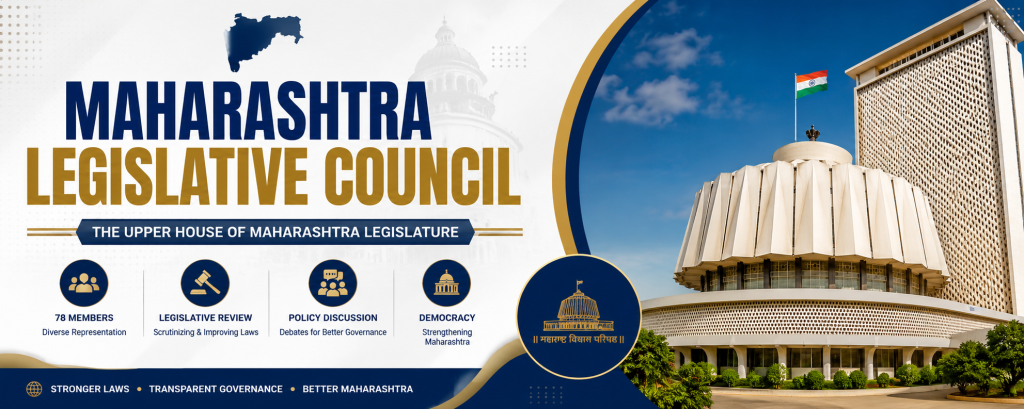
Maharashtra Legislative Council: Structure, Powers, and Its Role in State Governance
The Maharashtra Legislative Council, also known as the Maharashtra Vidhan Parishad, plays a crucial role in the state’s democratic framework. As the upper house of the bicameral Maharashtra Legislature, it serves as a reviewing and deliberative body that helps improve legislative decision-making. While the Maharashtra Legislative Assembly often receives greater public attention, the Legislative Council remains an essential institution that contributes to balanced governance and policy oversight.
Council is the upper chamber of the Maharashtra Legislature. Maharashtra is among a few Indian states that have a bicameral legislative system, consisting of the Legislative Assembly (Vidhan Sabha) and the Legislative Council (Vidhan Parishad). The Council functions as a permanent house and is not subject to dissolution. Instead, one-third of its members retire every two years, ensuring continuity in the legislative process.
total strength of 78 members. These members are elected and nominated through various channels to ensure representation from different sections of society. The composition includes representatives elected by local authorities, teachers, graduates, members of the Legislative Assembly, and individuals nominated by the Governor for their contributions to fields such as literature, science, arts, social service, and cooperative movements. Members serve six-year terms, with staggered retirements that maintain institutional stability and experience within the house.
The Council examines bills passed by the Legislative Assembly and suggests amendments or improvements. This review process helps ensure that legislation is carefully scrutinized before becoming law. Members debate public issues, government policies, and administrative decisions. These discussions contribute to more informed governance and accountability.
Through its unique electoral structure, the Council provides representation to educators, graduates, local government bodies, and distinguished individuals from various professional backgrounds. The Council can question ministers, raise public concerns, and discuss matters of state importance, thereby strengthening democratic accountability.
The Maharashtra Legislative Council continues to play a significant role in state politics. In 2026, the Election Commission announced elections for multiple Council seats, reflecting the ongoing political importance of the institution. Political parties have actively fielded candidates, and the elections are being closely watched as indicators of changing political dynamics within the state.
Recent debates in the Council have also focused on issues such as urban development, financial grants, infrastructure projects, and administrative accountability, highlighting the body’s continued relevance in addressing public concerns. Supporters of the Legislative Council argue that it acts as a stabilizing institution within the democratic system. Since it is not dissolved after elections, it provides continuity in governance and preserves legislative expertise.
The Council also allows experienced professionals and public figures to contribute to policymaking even if they are not directly elected to the Legislative Assembly. Critics occasionally question its necessity, citing costs and potential duplication of legislative work. However, many constitutional experts view the Council as an important mechanism for legislative review and balanced decision-making. representing diverse social groups, and ensuring continued policy discussions, the Council contributes significantly to effective governance.