
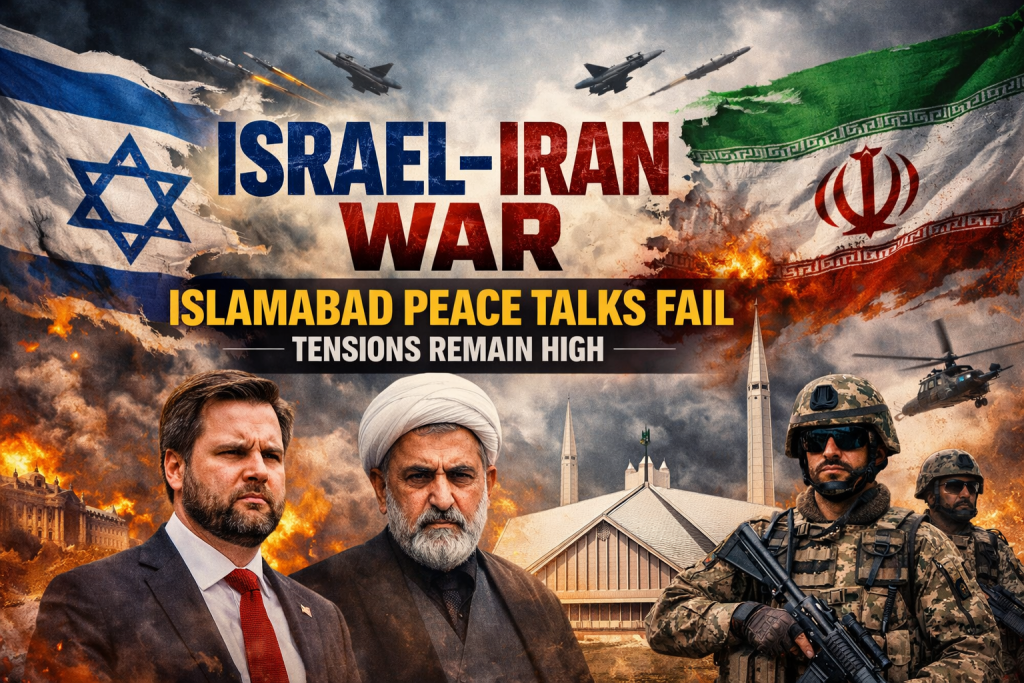
Israel–Iran War Latest News: Islamabad Talks Collapse, Ceasefire at Risk
The ongoing Israel–Iran war continues to dominate global headlines as high-level peace talks held in Islamabad, Pakistan ended without a final agreement. World leaders had hoped these historic negotiations would reduce tensions, but major disagreements have kept the conflict unresolved. The situation remains fragile, with fears that fighting could intensify again if diplomacy fails. Islamabad Peace Talks End Without Deal
High-stakes negotiations between the United States and Iran lasted nearly 21 hours in Islamabad but ultimately ended without a breakthrough agreement. The talks were part of an international effort to end the ongoing Middle East conflict linked to the Israel–Iran war. According to officials, both sides blamed each other for the collapse of the talks. Iran criticized what it called “excessive demands,” while U.S. representatives said Iran refused to accept key conditions. Despite the failure, diplomatic sources say negotiations could resume in the future as the global community continues to push for peace.
Why Islamabad Became the Center of Global Diplomacy Islamabad became a focal point for diplomacy as Pakistan hosted direct negotiations between American and Iranian leaders. These talks marked one of the highest-level diplomatic meetings between the two countries in decades. The meetings were held under strict security arrangements, with large areas of the city sealed off and heavily guarded. Authorities shut down roads and deployed thousands of security personnel to ensure safety during the negotiations. Pakistan played the role of mediator, attempting to bridge the gap between the two nations.
Key Issues Blocking the Peace Agreement Several major disagreements prevented the success of the Islamabad talks, including: Iran’s Nuclear Program: The U.S. demanded long-term restrictions on nuclear weapons development. Strait of Hormuz Control: Both sides argued over maintaining access to this crucial oil shipping route. Regional Ceasefire Conditions: Iran pushed for broader ceasefires involving other Middle East conflicts. Sanctions and Reparations: Financial disputes remained unresolved. These issues created deep divisions that made a final agreement difficult to achieve.
Current Situation in the Israel–Iran War While diplomacy continues, military tensions remain high across the region. The fragile ceasefire agreed earlier is still in place but remains at risk of collapse. Reports also indicate continued military movements and rising pressure in strategic locations, including shipping routes critical to global oil supplies. Analysts warn that if negotiations fail completely, the conflict could escalate again, affecting global markets and regional stability.
Global Impact of the Conflict The Israel–Iran war has had significant consequences worldwide: Oil Prices: Threats to shipping routes could impact global fuel costs. Security Concerns: Many countries are on high alert due to regional instability. Economic Effects: Markets remain volatile as investors monitor developments Humanitarian Impact: Civilian casualties and displacement continue to rise in conflict zones. International leaders continue to urge diplomacy to prevent further escalation. Although the Islamabad peace talks ended without an agreement, officials believe negotiations may continue soon. The coming
days are expected to be critical, especially if new diplomatic proposals are introduced. Experts warn that the next phase of the conflict will depend heavily on whether both sides return to the negotiating table or resume large-scale military actions. The Israel–Iran war remains one of the most serious global crises of 2026. The failure of the Islamabad peace talks highlights the complexity of resolving deep geopolitical tensions. While diplomacy efforts continue, the world remains on edge as leaders work to prevent further escalation and protect regional stability.