
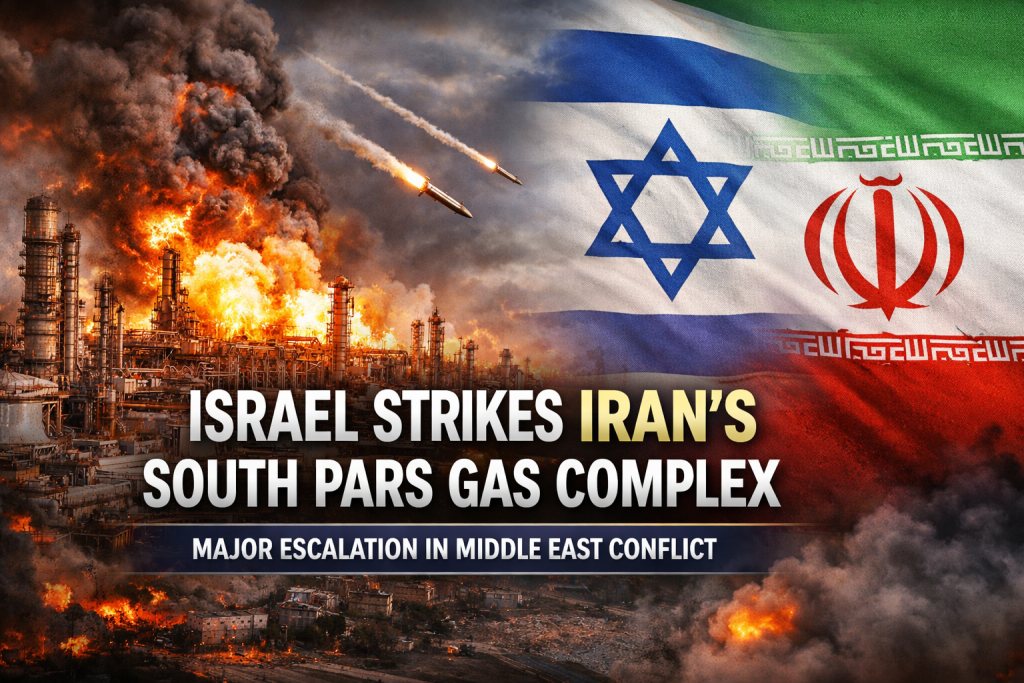
Israel Confirms Strike on Iran’s South Pars Gas Complex, Escalating Middle East Tensions
In a dramatic escalation of the ongoing Middle East conflict, Israel has confirmed a major strike on Iran’s South Pars gas complex—one of the country’s most critical energy facilities. The attack targeted Iran’s largest petrochemical plant and comes amid rising tensions involving the United States and Iran. Israel Targets Iran’s Largest Petrochemical Facility Israel’s Defence Minister confirmed that Israeli forces carried out a powerful strike on the petrochemical plant located at the South Pars
gas field in the coastal region of Asaluyeh. The facility is considered a vital part of Iran’s energy infrastructure and a key source of export revenue. According to officials, the strike hit what Israeli authorities described as Iran’s largest petrochemical installation, responsible for approximately 50% of the nation’s petrochemical production. The damage is believed to be significant, and operations at major facilities have reportedly been disrupted. Reports also indicate that casualties were recorded following the strike, marking another deadly development in the widening conflict.
Previous Attacks Triggered Iranian Retaliation This is not the first time the South Pars gas complex has been targeted. A previous Israeli strike in March sparked widespread retaliation from Iran, including missile and drone attacks against energy infrastructure in Gulf countries.That earlier escalation caused major disruptions in regional energy supplies and raised concerns among global markets. The new attack now risks triggering another wave of retaliation from Iran. Trump’s Earlier Warning Adds to Tensions The latest strike comes less than three weeks after former U.S. President Donald Trump warned against further attacks on Iran’s energy infrastructure.
At the time, Trump indicated that further escalation could lead to severe consequences and wider conflict. More recently, Trump has issued fresh warnings to Iran, demanding the reopening of the Strait of Hormuz and threatening large-scale attacks on Iranian infrastructure if negotiations fail. Iran has rejected several ceasefire proposals and warned of devastating retaliation if civilian or critical infrastructure continues to be targeted. Why the South Pars Gas Field Matters The South Pars gas field is one of the most important energy sites in the world. It is the largest natural gas field globally,
shared between Iran and Qatar, and serves as a major source of domestic power and export income for Iran. Gas from South Pars is used to produce electricity, heating fuel, fertilizers, plastics, and other industrial materials. Damage to the site can have far-reaching effects on both regional energy supply and global markets. Global Concerns Rise Over Escalation International leaders and organizations have expressed concern about the escalating situation. The conflict has already led to missile exchanges, infrastructure damage, and rising casualties across multiple countries.
Experts warn that continued attacks on energy infrastructure could lead to: Sharp increases in global oil and gas prices Disruption of international shipping routes Economic instability in energy-importing countries Expansion of conflict across the Middle East Oil prices have already surged amid fears that the Strait of Hormuz—a vital route for global oil shipments—could remain closed. What Happens Next Diplomatic negotiations are ongoing, but the situation remains highly volatile. With both sides exchanging threats and military strikes, the risk of a larger regional war remains high.