







A solar radiation storm, also known as a Solar Proton Event (SPE), is a powerful space-weather phenomenon caused by intense solar activity. When the Sun releases enormous energy in the form of solar flares or coronal mass ejections (CMEs), high-energy particles mainly protons are accelerated into space. If these particles reach Earth, they can disrupt satellites, aviation, and space missions. As solar activity rises during the Sun’s 11-year solar cycle, solar radiation storms have become a frequent topic in space-weather news
What Is a Solar Radiation Storm A solar radiation storm occurs when energetic charged particles from the Sun penetrate Earth’s magnetic environment. These particles can arrive within minutes to a few hours, traveling at near-light speed, making them one of the fastest solar hazards. Unlike geomagnetic storms (which affect power grids), solar radiation storms primarily impact Satellites & spacecraft Astronauts High-altitude aviation
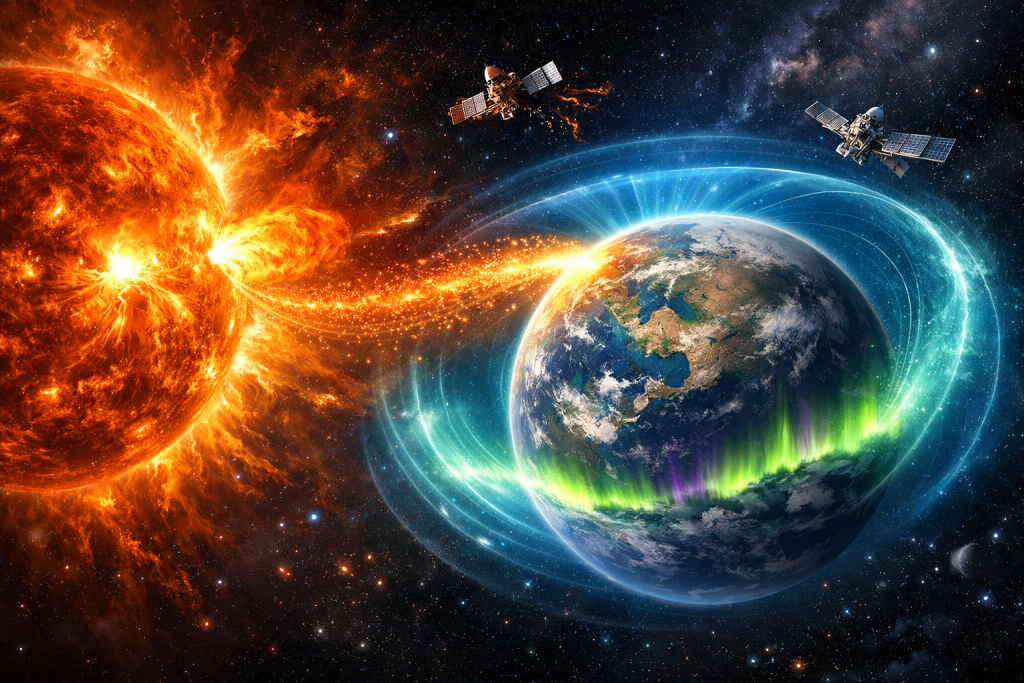
How Solar Radiation Storms Form Solar radiation storms usually follow these steps Solar Flare Explosion A sudden release of electromagnetic energy from the Sun’s surface Particle Acceleration Protons and ions gain extreme energy during flares or CME shock waves. Earth Impact These particles travel through space and interact with Earth’s magnetic field Effects of Solar Radiation Storms Impact on Space Technology Damage to satellite electronics Increased satellite noise and data errors Reduced lifespan of spacecraft components
Impact on Aviation Increased radiation exposure on polar flights Possible flight rerouting High-frequency radio communication disruptions Impact on Astronauts Serious radiation risk outside Earth’s atmosphere Space agencies issue warnings and keep astronauts shielded Effects on Earth Minimal impact on people at ground level Can intensify auroras (Northern & Southern Lights) May combine with CMEs to worsen geomagnetic storms
DIGI MERCH STORE PRINT ON DEMAND

Monitoring & Early Warning Systems Space agencies continuously track solar activity using satellites. Early warnings allow Airlines to reroute polar flights Satellites to switch to safe mode Astronauts to take protective measures Are Solar Radiation Storms Dangerous Astronauts: High risk Satellites: Moderate to high risk Air travel (polar routes): Moderate risk General public: Very low risk
A solar radiation storm is a dramatic example of how solar activity can affect modern technology. While Earth remains largely protected, increasing dependence on satellites, GPS, and space travel makes space-weather forecasting more important than ever Understanding solar radiation storms helps scientists, airlines, and space agencies prepare for future solar events and protect critical infrastructure.
spaceweather InfographicsPresentation
satellitedamage Affiliatemarketing
solarprotonevent DigitalMarketing
geomagneticstorm Instagramposts
Solarradiationstorm productcatlog
Comment